
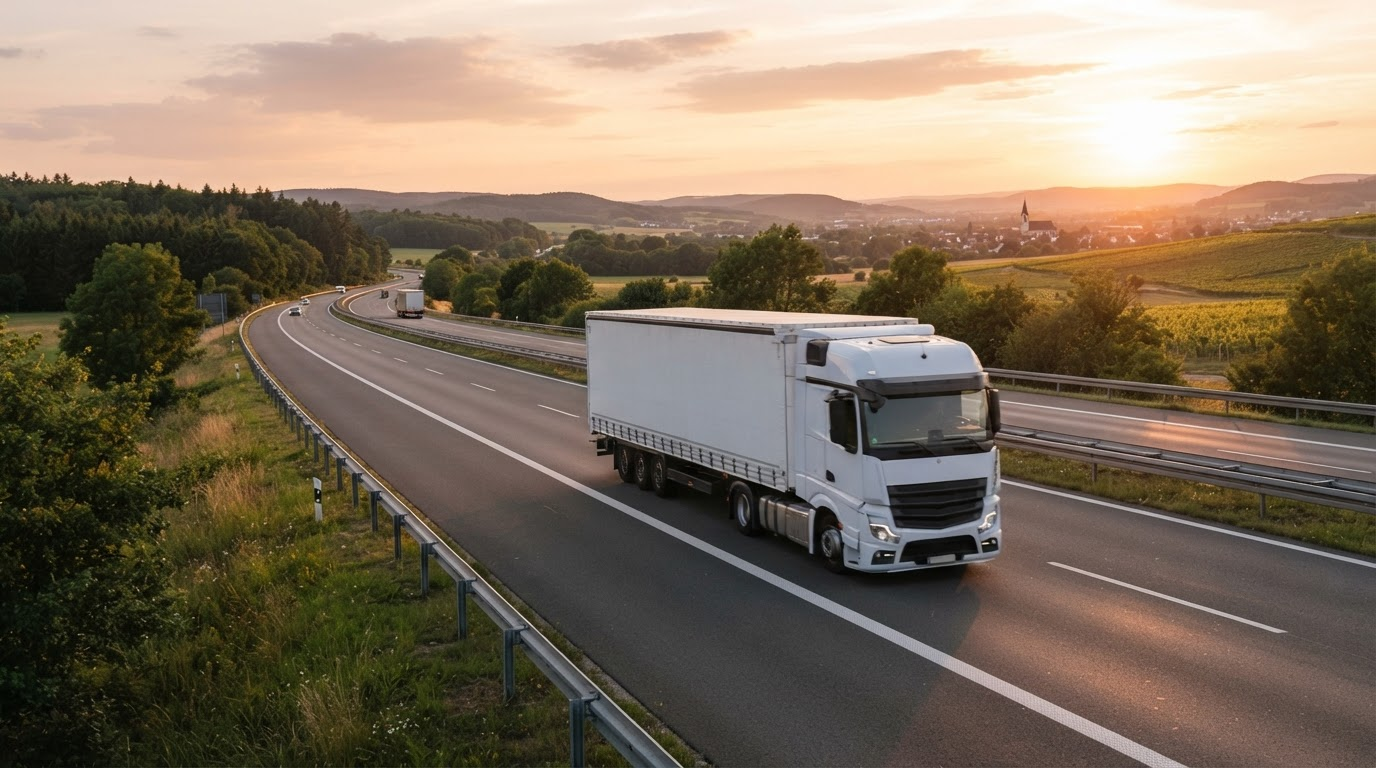
The EU ETS2 is a new carbon pricing scheme that, as part of the "Fit for 55" package, puts a price on CO₂ from fuels used in road transport and building heating. According to the European Commission, the ETS2 will become fully operational in 2028, with monitoring and reporting obligations having started earlier. For any business moving goods across Europe, the practical question is simple: how much could freight costs rise, and how do you plan for it now rather than later?
What exactly is the EU ETS2?
The EU already runs an emissions trading system — the original ETS — covering large industrial plants, power generation and aviation. ETS2 is a separate scheme covering sectors that were previously outside carbon pricing: road transport fuel (diesel, petrol), building heating fuel, and additional sectors, mainly small industry not covered by the existing ETS.
It does not charge carriers or drivers directly. The Commission is explicit on this point: it will be fuel suppliers, rather than end consumers such as households or car users, that are required to monitor and report their emissions. The obligated parties are the companies that place fuel on the market, and that cost is expected to filter down the chain to the pump price over time.
Like the original ETS, it's a cap-and-trade system: a limited number of emission allowances is issued each year, and the cap tightens progressively. The ETS2 cap is set to bring emissions down by 42% by 2030 compared with 2005 levels. Fewer allowances available generally means more upward pressure on their price, and therefore on fossil fuel costs.
When does it apply to road transport?
The Commission states that the system becomes fully operational in 2028. You may still find older material — including earlier drafts of the legislation — referring to 2027; the current official position is 2028, and the underlying legal text is Directive (EU) 2023/959, which amended the original ETS Directive to create ETS2.
There is also a price-containment mechanism worth knowing about. During the first two years, if the price of allowances exceeds €45 (in 2020 prices, i.e. adjusted for inflation), additional allowances may be released from the ETS2 market stability reserve. In plain terms: the design tries to prevent a sudden price spike, but it does not promise a ceiling you can budget against indefinitely.
Part of the auction revenue funds the Social Climate Fund, intended to mobilise at least €86.7 billion between 2026 and 2032 to support vulnerable households and micro-enterprises through the transition — which is why some of the cost you eventually see at the pump comes back into the economy in other forms.
What effect will this have on diesel prices and freight rates?
The expected effect is indirect but real: as the price of emission allowances rises, the cost of putting diesel on the market increases, and part of that increase typically reaches the price per litre at the pump. Carriers, in turn, tend to pass on sustained fuel cost increases through surcharges or rate adjustments — something the sector already knows well from years of oil price volatility.
There are no reliable figures yet on how much diesel or freight rates will rise, because that depends on the allowance price in a market that has not started trading for this sector yet. Any specific number circulating today is an estimate, not a fact — including the ones you'll see quoted confidently elsewhere. The sensible approach is to assume a moderate, gradual upward pressure on road transport costs over the medium term, and to build that margin into your logistics budget rather than waiting for the invoice to arrive.
One nuance that matters for planning: because the obligation sits with fuel suppliers, the cost reaches you through the pump price, not as a separate line item on a customs form. It will look like fuel inflation, not like a tax you can itemise — which is precisely why it's easy to miss until it has already moved your cost base.
How to prepare your logistics: 4 practical steps for SMEs
You don't need to wait until 2028 to reduce your exposure to this coming cost increase. These are the levers that actually move the needle:
1. Plan ahead instead of reacting later
Build ETS2 into your logistics cost forecast now, even with a wide range. Review longer-term freight contracts and ask your provider how they plan to pass on future fuel cost increases — a serious operator will explain this clearly, not bury it in a generic clause.
2. Consolidate shipments: groupage (LTL) instead of half-empty trucks
Every tonne travelling in a half-empty truck pays for the same fuel — and, in future, the same carbon cost — as if the vehicle were full. Groupage/LTL shares the diesel bill and the future carbon cost across several customers' cargo on the same route, which can mean meaningful savings compared with running a full truck at partial capacity. Our guide on choosing between groupage and a full truck walks through where the break-even point usually sits.
3. Work with carriers that actively optimise routes
Fewer empty kilometres and better-planned routes mean fewer litres of diesel burned per tonne moved, and therefore less exposure to the carbon surcharge once it lands. Ask your logistics provider how they optimise routes and fleet utilisation — it's a fair question, and increasingly a budget question, not just a sustainability one. We cover the mechanics in our piece on route optimisation in European logistics.
4. Ask for quotes with a clear cost breakdown
A quote that separates base rate, fuel, and possible future regulatory surcharges lets you genuinely compare providers and anticipate the impact of ETS2 on your operating costs, instead of discovering it on the first invoice after it takes effect. The same discipline helps you sanity-check transit times across the EU, where vague promises are just as common.
Sustainability is already becoming a cost factor
ETS2 turns something that was until now largely a reputational issue — cutting emissions — into a direct cost factor in road transport. Businesses already working with optimised routes and strong fleet utilisation aren't just emitting less CO₂; without necessarily aiming for it, they're also better positioned for this coming price pressure.
At Layner Group we plan every shipment across Europe with route optimisation and consolidation in mind, precisely to keep transport costs under control today — and ready for the regulatory changes ahead. That's the thinking behind our transparent freight pricing across Europe ahead of ETS2: an itemised rate, so you can see what you're paying for instead of absorbing a surcharge you never saw coming. If you ship partial loads, LTL groupage is the most direct way to stop paying for empty space. Tell us your route and volume and you'll get a preliminary offer in 15–30 minutes.
Need a shipping quote?
Reach out however suits you best — we reply fast and quote your route for free.


Comments
0Leave a comment
No comments yet. Be the first!