
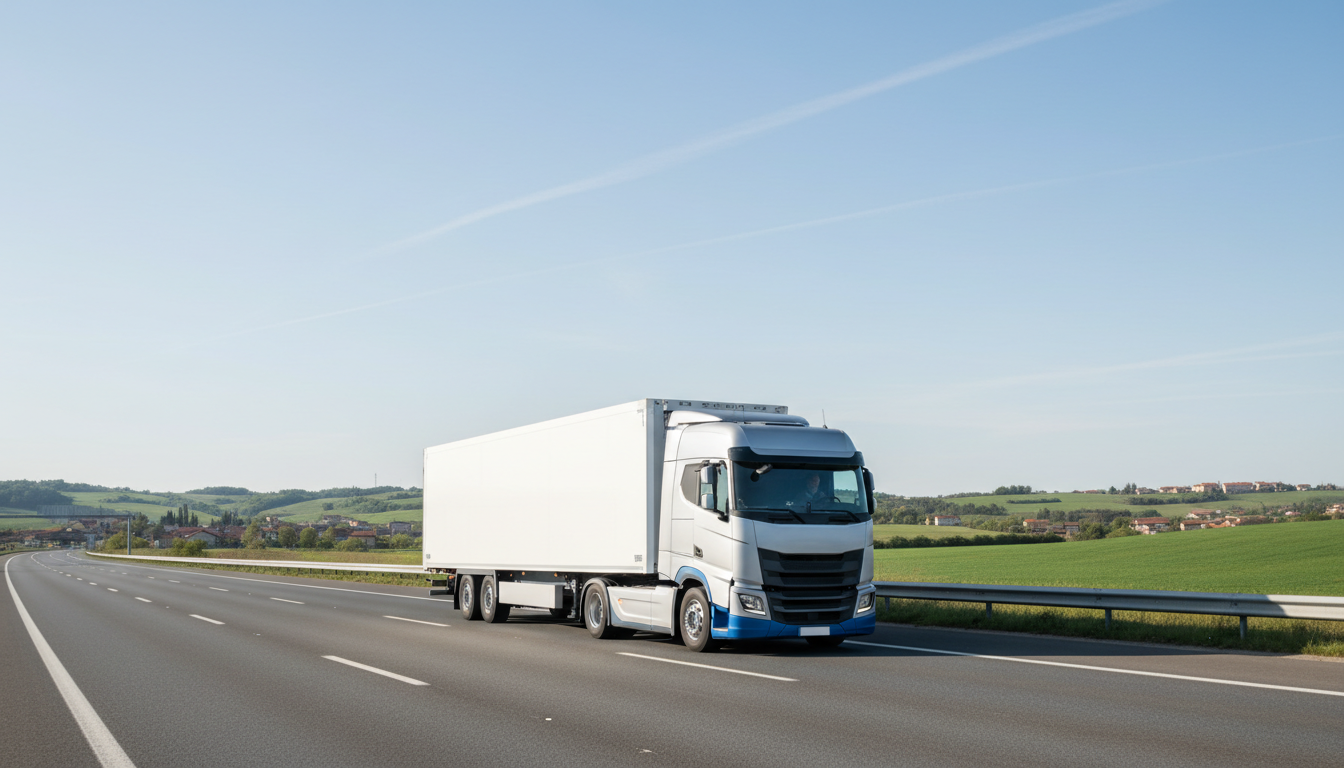
Companies moving freight across Europe are asking the same question more and more often: how will the EU's new ETS2 carbon pricing system affect road freight costs? Nobody can give you a single exact figure yet — but the uncertainty itself is already a problem. How do you budget an import or export shipment when a carrier's rate can shift at the last minute, with a line item on the invoice nobody explained in advance?
Why ETS2 worries businesses shipping within the EU
ETS2 is a new EU emissions trading system covering fuel for buildings and road transport, including freight. The regulation has already been adopted at EU level, while the exact entry-into-force dates and transition arrangements are still being clarified and, in some proposals, pushed back. For a shipper, the practical takeaway is simple: over time, the fuel component of a carrier's rate will start reflecting the cost of emissions, not just litres of diesel.
For an SME planning an import or export budget, the real risk isn't the cost increase itself — it's not knowing how or when it will hit. A shipping estimate calculated today can stop matching the actual invoice a few months later if the carrier never explained what the rate is built from or how it reacts to fuel-cost changes.
A transparent quote — the part you can control right now
At Layner Group, we won't promise to "cancel out" ETS2 or hand you an exact number for how much the fuel component will rise — that depends on the route, the volume, and decisions the EU hasn't finalised yet. What we can offer is what actually keeps a budget under control: a clear, itemised freight quote with no hidden charges appearing after the fact.
You get a preliminary quote in 15–30 minutes, broken down by cost item — not a vague "fuel surcharge as incurred" line. Our own fleet, from 1 to 24 tonnes, means we match the vehicle to your cargo instead of charging you for empty space. Routes are planned with load and mileage optimisation, which already reduces fuel consumption today — and with it, your indirect exposure to future fuel-cost increases, regardless of how the EU eventually structures the ETS2 transition.
We operate under CMR consignment terms and ISO 9001 standards, so carrier liability along the route is documented, not just promised verbally. Payment is flexible: a 10% booking deposit, with the balance due before unloading — no blind full prepayment required.
Need a shipping quote?
Reach out however suits you best — we reply fast and quote your route for free.
What you can do now, ahead of the final ETS2 timeline
While the EU finalises the transition details, shippers already have levers that reduce budget sensitivity to rising fuel costs — and none of them depend on exactly when or how ETS2 takes effect. The first is choosing the right shipping format: for smaller, non-urgent volumes, groupage (LTL) is often more cost-effective than booking a dedicated vehicle, because fuel and road costs are shared across several shippers. For large, regular volumes, a full truckload (FTL) with no intermediate transhipment is usually the more economical option.
The second lever is planning ahead. A flexible loading window lets a carrier fit your shipment into an optimised route instead of dispatching a vehicle on short notice, which almost always raises cost regardless of any regulatory factor. The third is working with a carrier who shows you the rate broken down by line item rather than a single lump sum — so you can see exactly what portion is fuel and mileage, what portion is loading and handling, and what portion is CMR insurance coverage.
What we need to quote your shipment — and how fast you get an answer
For an accurate quote rather than a rough range, we need a few basics: origin and destination, cargo volume and weight, packaging or palletisation, required timing, and any special handling requirements — fragile, oversized, or temperature-controlled cargo. That's enough to give you a substantiated figure within 15–30 minutes, not a wide "from–to" range that's hard to plan a budget around.
This kind of transparency matters even more right now, as European fuel costs grow more sensitive to regulatory decisions. A clear rate structure won't cancel out external factors, but it removes the single biggest budgeting risk: a surprise on the final invoice that derails your import or export budget.
If you're planning regular shipments or a one-off delivery and want to see the price structure upfront instead of guessing what's included, request a quote from Layner Group. You'll get a clear, itemised answer in 15–30 minutes, with no hidden conditions.