
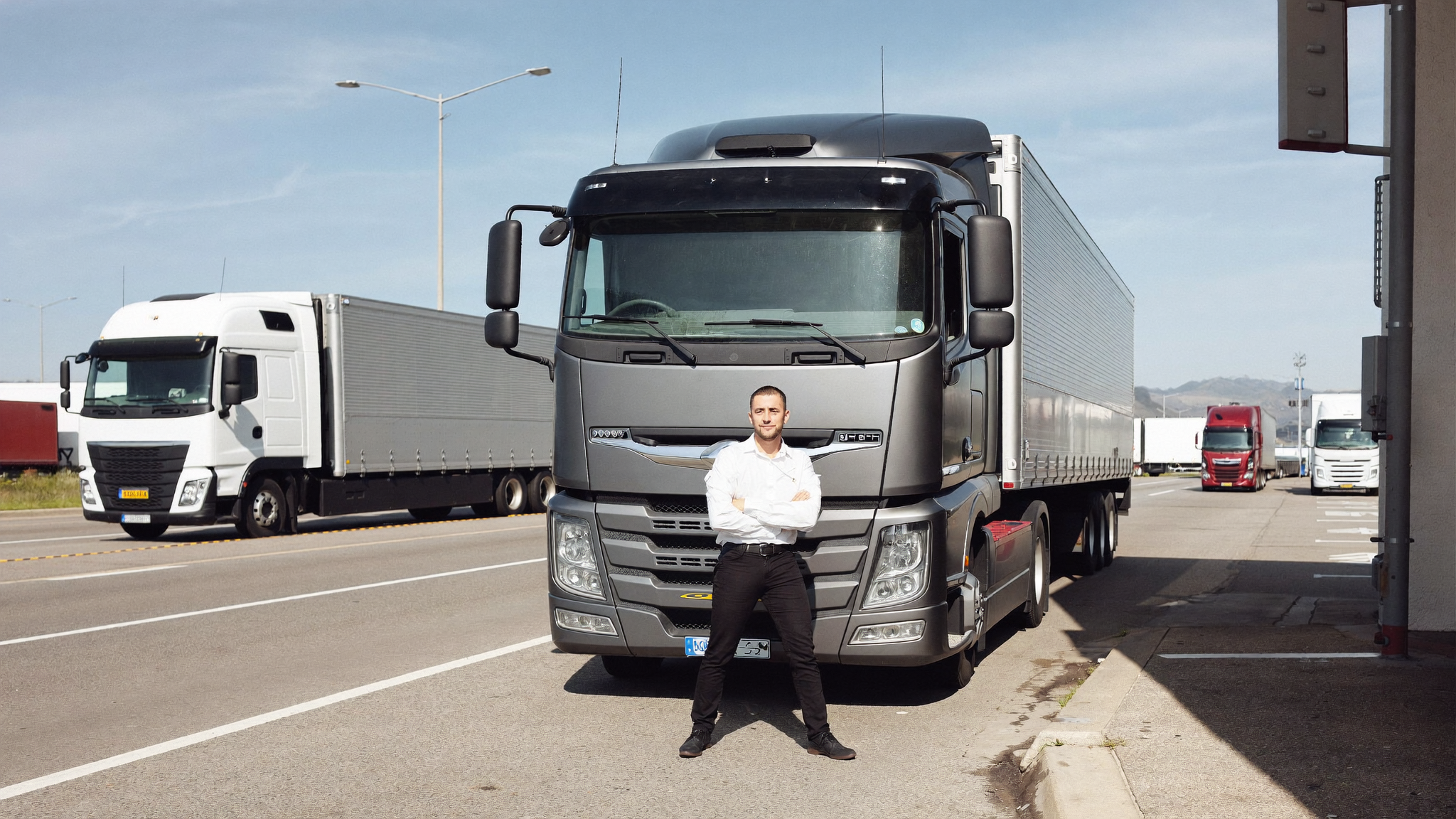
If it has recently taken longer to find an available truck, or a quote came back higher than you expected, that is not a coincidence. Europe is dealing with a structural shortage of professional truck drivers that industry reports put at more than 500,000 unfilled positions. Here is why the shortage exists, what it means in practice for businesses and people relocating, and how to reduce the risk of delays and rising rates.
Why is there a truck driver shortage in Europe?
It is not one cause but several that have been building up for years:
- An aging workforce. A large share of active professional drivers in the EU are over 50. Every year more drivers retire than new ones enter the profession, and generational replacement is not keeping pace.
- Limited appeal for new entrants. Long shifts, nights away from home and an outdated image of the job push many younger candidates toward careers with more predictable schedules.
- Licensing and recognition barriers. Getting a C+E licence and the Certificate of Professional Competence (CPC) takes time and money that not every candidate is willing to invest without a guaranteed job waiting. On top of that, recognising licences and qualifications from drivers outside the EU is a slow administrative process, which limits how quickly companies can fill vacancies with non-EU candidates.
What do industry reports actually say?
According to the IRU (International Road Transport Union) report published in June 2026, Europe has around 502,000 unfilled truck driver positions — a 13% shortage rate, one of the highest in the world — and in almost every market surveyed, the 2025 shortage rate was higher than the 2021 baseline. 65% of European operators rank the driver shortage as their most pressing concern, four times the rate of any other issue. Demographic pressure adds to this: per IRU's own figures, around 660,500 drivers are expected to retire across Europe by 2030 — roughly 20% of the sector's current workforce. This is not Layner Group's own data: it is the industry's own reading of the situation, and it is best treated as a worsening underlying trend, not a fixed snapshot for any single month.
Does this affect every route and transport type equally?
Not quite. The shortage weighs more heavily on long-haul international transport than on urban last-mile delivery, because long routes mean more nights away from home and a schedule that fits worse with family life — exactly what puts off new candidates the most. There are also differences between countries: for years, drivers from Eastern Europe covered a large share of demand for Western European fleets, but that talent pool is aging too, and domestic markets in those countries now absorb part of those professionals themselves. The result is that the long-haul intra-European corridor — the one most used for international moves and groupage freight — is one of the segments most exposed to this trend.
What does this mean in practice for your business or your move?
A driver shortage does not mean "there are no trucks," but it does translate into a few concrete effects worth planning for.
Less capacity available during peak periods
During high-demand windows — quarter-end shipping, year-end campaigns, or summer for household moves — available capacity runs out faster than usual. Booking with some margin stops being generic advice and becomes a real necessity if you need the right vehicle on the exact date you need it.
Upward pressure on rates
When the pool of qualified drivers is limited, the cost of operating a truck rises, and that pressure tends to filter through to freight rates, especially on high-demand routes or time slots. It is not always a sharp jump, but it is a trend worth building into your annual logistics budget.
Why a carrier with its own fleet matters more now
In a tight market, not every provider responds the same way. A company that chains every shipment out to third-party subcontractors has more points of failure: if the subcontractor cannot find a driver in time, the schedule slips and the end client finds out late. Working with a carrier that combines an owned fleet with an established, proven partner network reduces that risk, because it does not depend on finding a free driver on the spot market at the last minute.
What you can do, beyond choosing the right carrier
The driver shortage is a market factor outside your direct control, but a few decisions are still yours to make and do reduce the impact:
- Plan with real lead time. If you know the date of your move or an important shipment, request a quote weeks in advance, not days, especially if it falls during a peak period.
- Stay flexible on dates when you can. A two- or three-day margin on the loading date significantly widens your options for vehicle type and price.
- Consider groupage (LTL) when volume allows it. Sharing a truck with other shipments reduces your dependence on securing a full vehicle for that exact date.
- Be wary of prices well below the market. In a market short on drivers, an unusually low rate usually means a long subcontracting chain and a higher risk of a last-minute cancellation.
How Layner Group manages this risk
At Layner Group, part of our operation runs on our own fleet, from 1 to 24 tonnes, which gives us direct control over part of our capacity without relying exclusively on third parties. For other routes, we work with an established partner network across the EU that we use on an ongoing basis, not on a one-off basis — which lets us anticipate availability instead of scrambling for it once time is already tight.
We also provide a preliminary quote within 15-30 minutes, so you can compare options and lock in capacity as early as possible, and we offer flexible payment (10% deposit, the balance before unloading), so booking a truck in advance does not mean tying up your entire budget at once.
If you have an international move or a commercial shipment planned for the coming weeks, the earlier you plan it, the more room you will have in a market with fewer available drivers than usual. Request a quote now and secure your loading slot before the next demand peak hits.
Need a shipping quote?
Reach out however suits you best — we reply fast and quote your route for free.







Comments
0Leave a comment
No comments yet. Be the first!