
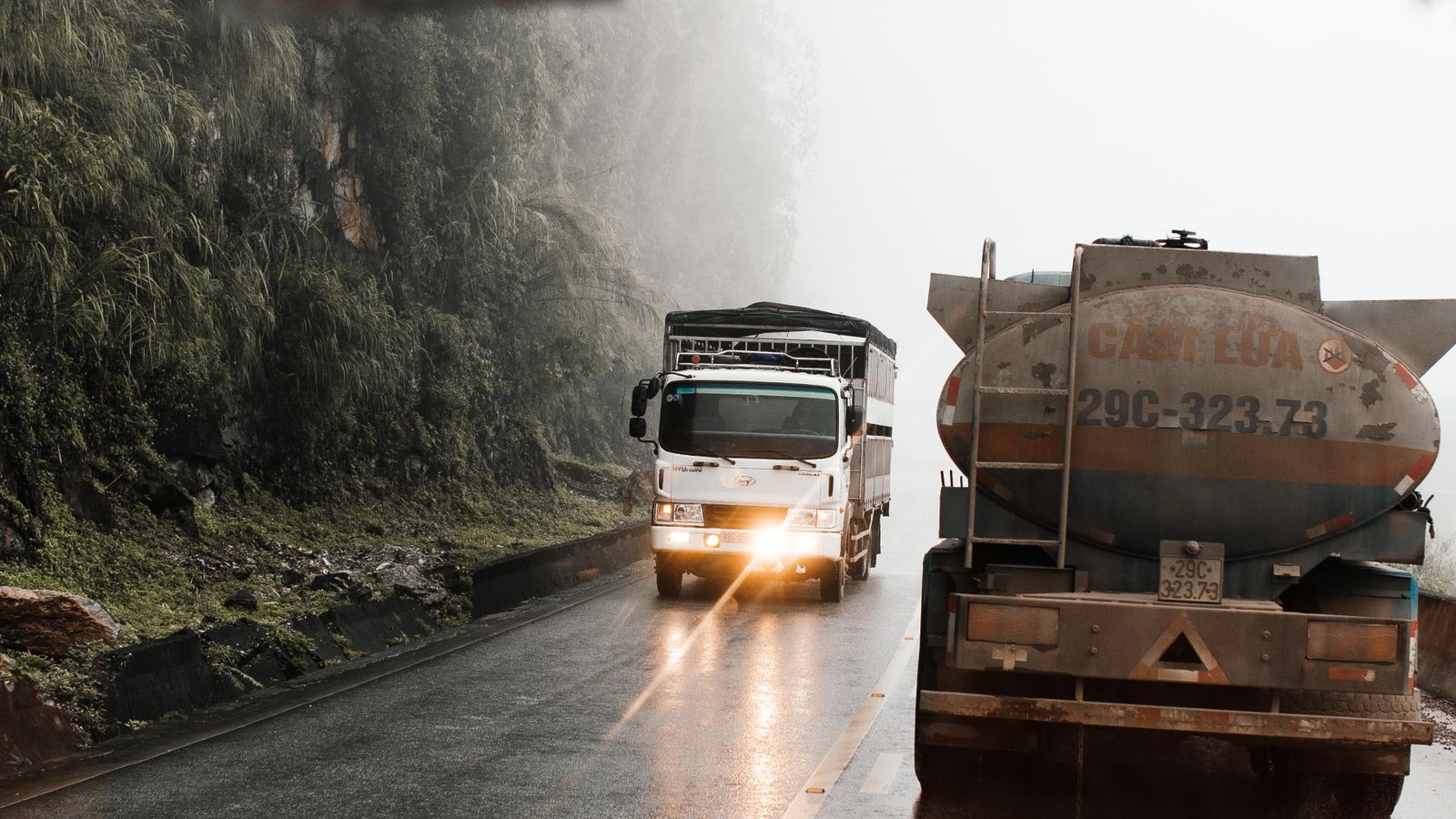
A move from Austria to Italy costs less than most other routes on this blog, simply because the two countries share a direct land border with no detour through a third country. As a starting point: groupage for a 2-3 room flat runs roughly €1,400-2,800, and a dedicated truck for a full house runs roughly €3,500-5,500. The exact figure depends on volume, route and extra services, but the range sits lower than longer corridors such as a move to the Netherlands or Spain, precisely because the direct leg is short.
What determines the price of an Austria-Italy move
Four factors shape the final quote, and it's worth looking at each on its own rather than anchoring on a single "average" price.
Volume in cubic metres
This is the main variable. A carrier prices by the volume your belongings take up in the truck (m³), not the number of boxes — which is why two outwardly similar flats can get very different quotes: one three-room flat might fill 25 m³, another with denser furniture and appliances might need 40 m³.
Groupage (LTL) or a dedicated vehicle (FTL)
Groupage splits the cost of the run across several clients and usually comes in at close to half the price — savings of up to 45% are realistic. A dedicated vehicle costs more but gives you a fixed date and one truck door-to-door with no transfer at a transit hub. On the Austria-Italy route, where groupage departures are frequent, the timing gap between LTL and FTL is usually smaller than on less-travelled corridors.
Access at pickup and delivery
A walk-up floor with no lift, a narrow street with nowhere for the truck to park, or having to carry furniture across a courtyard — each of these adds crew time, and time is what drives the price up.
Extra services
Professional packing for fragile or valuable items, furniture disassembly and reassembly, and temporary storage when move-out and move-in dates don't align are not included in a base quote by default; they're added as needed.
Indicative volume by home type
| Home type | Typical volume | Usual transport format |
|---|---|---|
| Studio / 1 room | 10-15 m³ | Groupage |
| 2 rooms | 18-25 m³ | Groupage |
| 3 rooms | 28-38 m³ | Groupage or dedicated truck, depending on the timeline |
| House / 4+ rooms | 45 m³ and up | Dedicated truck |
Route geography: why Austria-Italy is one of the more direct corridors
Unlike many of the other routes we cover, Austria and Italy share a direct border, and two main road corridors cross it. The western route runs over the Brenner Pass — a short, heavily used crossing from Tyrol into South Tyrol (Innsbruck to Bolzano is effectively a same-day run). The eastern route runs through the Tarvisio/Villach crossing, connecting Austrian Carinthia with Italian Friuli-Venezia Giulia and on toward Venice and Milan.
Real road distances: Vienna-Milan is about 840 km, Vienna-Rome about 1,180 km, Graz-Verona about 430 km, and Innsbruck-Verona only about 280 km. Compared with corridors that need to cross two or three countries, that's a short and predictable leg. The practical effect: groupage departures run more often on the Austria-Italy route, and the LTL delivery window is narrower than on quieter corridors — your belongings don't sit waiting for a full week for a shared load to fill up.
Arrival formalities in Italy
A move between Austria and Italy is an EU-to-EU move, so there's no customs clearance for your household goods. There is, however, an administrative side worth knowing in advance.
An EU citizen can stay in Italy for up to three months without any residence document. The European Commission's official "Your Europe" portal is explicit on this: during the first three months of your stay in another EU country, you cannot be required to apply for a residence document. After three months, the authorities may require you to register with the local authority — in Italy, the municipal Anagrafe. The same source specifies that the registration certificate should be issued immediately, and that it cannot cost more than what nationals pay for an identity card — this is a formality, not a bureaucratic hurdle (European Commission, Your Europe — Registering residence).
If a vehicle is travelling with the move, a separate rule applies. For vehicle registration purposes, the EU treats your normal residence as the country where you spend more than 185 days in a calendar year. Once Italy becomes that "normal residence," the obligation kicks in to re-register the car there and pay the related taxes locally rather than in Austria (European Commission, Your Europe — Vehicle registration abroad). The exact deadline for re-registration is set by Italian national rules and can differ from the general EU guidance, so it's worth confirming with the local authority ahead of time — our guide to shipping a car or motorbike abroad walks through all three transport options and the paperwork each one needs.
Next step
The Austria-Italy corridor is one of the more convenient routes we run, precisely because of the direct border: fewer transfers, more open groupage dates, and a shorter waiting window. We've been organising these moves for more than 5 years, completed over 1,500 residential relocations and 10,000 commercial shipments, and operate our own fleet from 1 to 24 tonnes from offices in France and Poland, with coverage across all 27 EU countries. We work under ISO 9001 certification with CMR liability on every shipment, and payment is flexible: a 10% deposit to book, with the balance due before unloading.
If you want to understand what drives moving costs across Europe more broadly, we have a separate breakdown of what determines the price of an international move, and before you sign with any carrier it's worth checking our guide on how to choose an international moving company. A ready-made door-to-door solution for this exact route is available on our Austria-Italy door-to-door moving page.
Send us your volume and route, and a preliminary quote for your Austria-to-Italy move will come back within 15-30 minutes.
Need a shipping quote?
Reach out however suits you best — we reply fast and quote your route for free.



Comments
0Leave a comment
No comments yet. Be the first!