
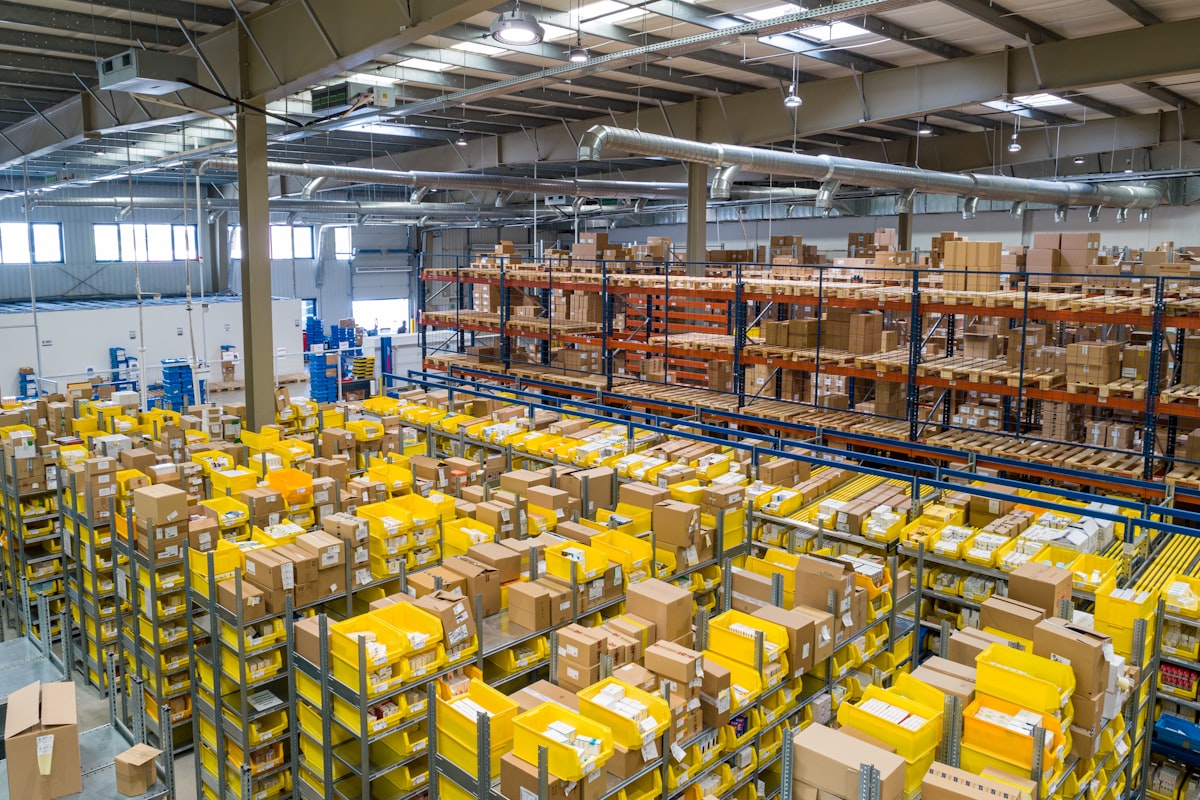
Choosing between groupage and a full truck is one of the first decisions when you ship cargo across Europe, and it shapes both what you pay and the day your goods arrive. Get it right and you stop paying for empty space; get it wrong and you either overpay for air or spend two extra days waiting for a trailer to fill.
What each option means
Groupage, or less-than-truckload (LTL), combines your goods with other customers' cargo in the same truck: you pay only for the space and weight you use. A full truckload (FTL) books the whole vehicle for your shipment, which travels direct, with no intermediate stops or transfers.
The distinction matters more in Europe than people expect. According to Eurostat, EU road freight amounted to 1 886 billion tonne-kilometres in 2025, of which 24.4% was international transport and 62.2% national. Cross-border lanes are a minority of the total volume, which is precisely why consolidation exists: on many international routes, no single SME fills a trailer on its own.
When groupage makes sense
- Small or medium shipments that do not fill a whole truck — typically anything from one pallet up to roughly a third of a trailer.
- Tight budgets: planned well, groupage can cut the bill substantially versus paying for a full vehicle you won't fill.
- Flexible deadlines, since the route may include several pickups and drop-offs.
- Regular, predictable volumes: a recurring weekly pallet is easier to slot into a consolidated line than a one-off.
When a full truck makes sense
- Bulky loads that take up most of the trailer. Note that "full" can mean full by volume long before it's full by weight — light, bulky goods hit the ceiling first.
- Fragile or high-value goods that should not be handled at transfer points.
- Tight deadlines: going direct, it usually arrives sooner and with fewer variables.
- Temperature-controlled or ADR cargo that can't share space with incompatible goods.
The decision in three steps
1. Measure the real volume and weight. Not the estimate — the actual pallet count, dimensions and gross weight. Loads often take up less than they seem, and this is the number every carrier will quote against. Remember that a truck has two separate ceilings, weight and volume, and the legal limits for both are set by EU rules on weights and dimensions of heavy-duty vehicles, laid down in Council Directive 96/53/EC.
2. Weigh urgency and fragility. Each transfer point in a groupage route is a place where a pallet can be damaged or delayed. If your goods can't tolerate that, the calculation changes regardless of volume.
3. Compare total cost per shipment, not price per kilometre. A cheap per-km rate with two transshipments and a three-day window is not cheaper than a direct run if a delay costs you a customer. Include handling, waiting time and the risk of damage in the comparison.
A quick way to sanity-check the answer
| Your situation | Usually the better fit | Why |
|---|---|---|
| 1-6 pallets, flexible date | Groupage (LTL) | You pay for the space you use, not the trailer |
| Over a third of a trailer, firm date | Full truck (FTL) | Direct run, no waiting for the load to fill |
| Fragile or high-value | Full truck (FTL) | No handling at transfer points |
| Recurring weekly volume | Groupage (LTL) | Predictable volume slots easily into a fixed line |
| Light but very bulky | Full truck (FTL) | You'll hit the volume ceiling long before the weight one |
In practice, well-organised groupage offers the best balance of price and reliability for most small businesses shipping across the EU. The exception is the shipment that genuinely can't wait — and knowing which of yours those are is half the planning.
Don't forget the paperwork
Whether groupage or full truck, a shipment is usually held at the border because of documents, not the transport itself. Have the commercial invoice, the CMR and, where relevant, customs paperwork ready before pickup. Our guide to CMR, T1 and the key documents for EU road freight lists what each one is for, and the seven reasons cargo gets held at EU customs covers what goes wrong most often.
One thing to settle in the contract, not at the loading dock: which Incoterm applies. It decides who pays for each leg and where the risk transfers — and in groupage, where goods change hands more often, that matters more, not less.
A common mistake is to look only at price and neglect packaging. In groupage your goods share space and are handled more, so proper palletising and strapping makes the difference between arriving intact and arriving as a claim. If your timeline is tight either way, it's worth knowing what realistic transit times across the EU look like before you promise a delivery date to your own customer.
Next step
At Layner Group we optimise every route to cut cost and emissions, with door-to-door tracking and a preliminary offer in 15-30 minutes. If you ship partial loads regularly, our LTL groupage service across Europe is built for exactly that. And if you're unsure which option fits your shipment, tell us the pallet count, weight and route — we'll quote both, free and with no obligation, so you can compare them on the same terms.
Need a shipping quote?
Reach out however suits you best — we reply fast and quote your route for free.




Comments
0Leave a comment
No comments yet. Be the first!