
A EUR-pallet measures 800 × 1,200 × 144 mm and weighs around 25 kg: it's the de facto standard for moving palletized cargo by road across the European Union, defined technically by EPAL and rooted in the UIC railway standards of 1961. This guide covers the exact EUR-pallet dimensions and why they drive your groupage cost, how the pallet exchange system actually works, how it compares with other pallet formats, and the palletizing mistakes that make a shipment more expensive or slower to arrive.
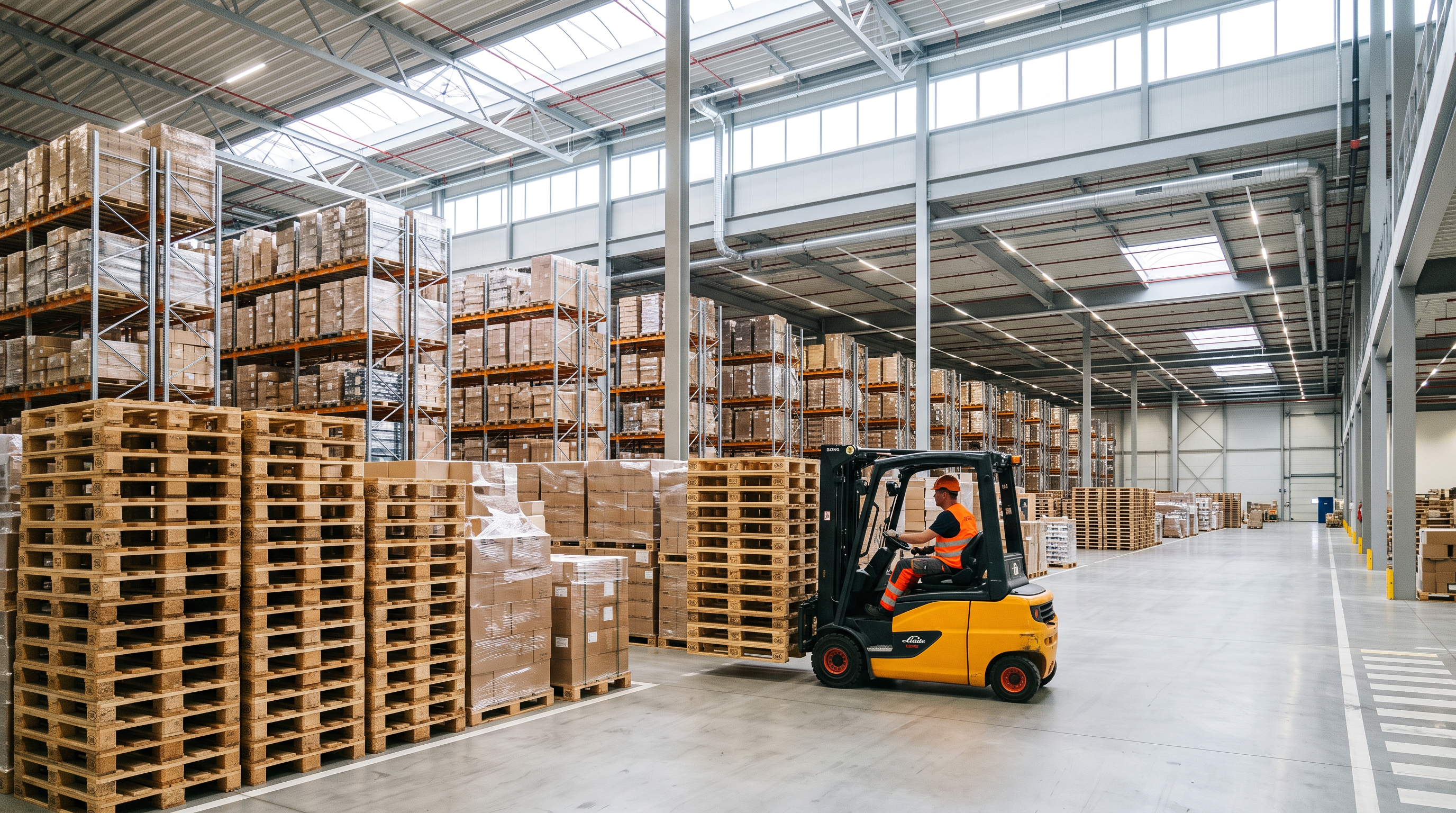
What the EUR/EPAL pallet is, and why it became Europe's standard
The EUR-pallet — also called a Euro pallet or EPAL pallet — is a wooden load-carrying platform that started life in European rail freight and ended up as the standard handling unit for almost the entire continental supply chain. Its origin goes back to 1961, when the International Union of Railways (UIC) set out, in its 435 series of technical leaflets, the manufacturing and repair conditions a pallet had to meet to circulate between rail operators in different countries without losing compatibility.
Today, the body that certifies manufacturing, quality and the licensed repair network for these pallets is the European Pallet Association (EPAL), which maintains that technical standard and licenses both manufacturers and repair workshops. That's why a EUR/EPAL pallet made in Poland and one made in Spain are, in practice, interchangeable: both are built to the same specification, with the same tolerances for timber, nailing pattern and strength.
The reason this format won out over others isn't accidental: warehouses, racking, loading docks, forklifts and trailers across Europe are now sized around EUR-pallet dimensions. Using a different format inside the EU isn't impossible, but it usually means wasted space at every link in the chain.
EUR-pallet dimensions, and why they matter for your groupage cost
According to EPAL's official specification, the EUR-pallet dimensions and build are:
- 800 mm long × 1,200 mm wide × 144 mm high.
- Own weight: approximately 25 kg.
- Construction: 11 boards, 9 blocks and 78 nails, with board thickness between 22 and 24 mm.
- Dynamic safe working load (in transit): up to 1,500 kg.
- Static stacking: the bottommost pallet in a stack must not carry more than 5,500 kg on a solid, level surface.
These aren't catalogue trivia — they're the numbers every carrier uses to work out how much space and weight your shipment actually takes up, and therefore what it costs. A standard European trailer, with an internal width of roughly 2.45 m and a length of about 13.6 m, holds somewhere around 33 to 34 EUR-pallets in a single, unstacked layer, loaded with the 1,200 mm side across the width. That figure — not a rough volume estimate — is what decides whether your load takes up half a shared vehicle or a third of one.
That's why, before requesting a quote, it pays to count the real number of pallets, their stacked height and the exact gross weight: that's the base figure behind any groupage quote, and it's also what decides whether groupage or a full truck suits your shipment. We cover that decision in more detail in our guide on how to choose between groupage and a full truck.
How the pallet exchange system actually works
One reason the EUR/EPAL pallet is cheap to use day to day is that it's almost never bought outright — it's exchanged. When a carrier delivers goods on EUR/EPAL pallets, standard practice is for the receiver to hand back the same number of empty pallets, of the same type and in good condition, on the spot, or to sign a pallet exchange note to settle the balance on a later delivery. That way, the same physical pallet can circulate for years between dozens of companies without anyone having to buy a new one for every shipment.
The system only works because there's an objective standard for which pallets are exchangeable and which aren't. Per EPAL, a pallet stops being exchangeable when it's missing boards or blocks, has boards broken transversally or diagonally, shows splintering that exposes the nail shanks, or is otherwise in poor enough condition that its safe working load can no longer be guaranteed. A pallet in that state isn't simply rejected — it gets repaired, and EPAL is explicit that only EPAL-licensed repair operations may do that work under its technical regulations, precisely so the repaired pallet stays exchangeable across the whole network.
For a business shipping groupage for the first time, that has a practical consequence: if your outbound pallets don't meet the standard, the carrier can refuse the exchange at destination, leaving your supplier without the empty pallet they expected back. Asking about the exchange policy before the first pickup avoids surprises on the invoice.
EUR-pallet vs. the American pallet and the industrial pallet
Not every pallet in the world is the same size, and mixing formats on one load usually means wasted space. The three formats you'll run into most often trading with Europe are:
| Format | Dimensions | Typical use |
|---|---|---|
| EUR-pallet (EUR/EPAL) | 800 × 1,200 × 144 mm | De facto EU standard: retail, industry, road groupage |
| Industrial / ISO 1000×1200 pallet | 1,000 × 1,200 mm | Heavier or bulkier loads, common in chemicals and construction |
| American pallet (GMA) | 1,016 × 1,219 mm (40 × 48 in) | Standard in the US and Canada |
The difference matters more than it looks. An American pallet doesn't fit efficiently across a European trailer's width, or on racking built around 800 × 1,200 mm, so goods arriving in the EU on American pallets are almost always re-palletized before continuing by road. And within a single groupage shipment, mixing EUR-pallets with the larger industrial format complicates the carrier's space calculation: two different footprints don't nest together in a trailer as cleanly as uniform pallets do, and somebody pays for that wasted gap.
Palletizing mistakes that make a shipment more expensive or slower
Most of the extra cost and delay tied to palletizing has nothing to do with a badly built pallet — it comes from how the load is prepared before the truck arrives. The most common issues:
- Cargo overhanging the pallet. Goods hanging over the sides or top are unstable, can damage neighbouring pallets in a groupage load, and are often refused outright at pickup.
- Under-strapped or under-wrapped loads. A poorly secured pallet shifts during loading and unloading at the various stops on a consolidated route, risking damage to your goods and to another customer's cargo sharing the truck.
- Using a pallet that's no longer exchangeable, unknowingly. Broken blocks or splintered boards aren't just a safety issue — they complicate the exchange at destination, as covered above.
- Misjudged stacking height. Exceeding the 5,500 kg static stacking limit on the base pallet, or ignoring the trailer's maximum height when stacking, forces the load to be reorganised on the spot, losing time.
- Quoting on estimated rather than real weight and volume. An optimistic pallet count almost always gets revised upward at pickup, and that adjustment puts pressure on both price and delivery date.
None of this is a minor detail: the European Commission notes that up to 25% of truck accidents in the EU are linked to poorly secured cargo, and precisely because each member state applies its own rules, the Commission has published common cargo-securing guidelines for road transport. Correct palletizing isn't a formality — it's what separates a shipment that arrives intact from one that turns into a damage claim.
Next step: palletize it right, and pay only for the space you use
Knowing EUR-pallet dimensions and how the exchange system works isn't an isolated technical exercise — it's what lets you work out exactly what your groupage shipment will cost, and stops a palletizing mistake from turning into extra cost or a damaged load. At Layner Group, we palletize, strap and prepare cargo to this standard as part of the service, and our LTL groupage service across Europe only bills you for the space your goods actually take up, saving up to 45% versus booking a full truck. If your regular lane is France–Belgium, for example — one of the busiest groupage corridors on the continent — see the specific terms on our LTL groupage France–Belgium page.
Tell us your pallet count, weight and route, and we'll get back to you with a preliminary offer in 15-30 minutes, no obligation.
Need a shipping quote?
Reach out however suits you best — we reply fast and quote your route for free.





Comments
0Leave a comment
No comments yet. Be the first!