
Every day, pallets move between France and Belgium in volumes that rarely add up to a full trailer — one pallet here, three there, a partial order that doesn't justify booking an entire truck. Pay for a full vehicle on a shipment like that and you're paying for metres of empty floor the whole way. Add to that a carrier who can't commit to a firm pickup or delivery window, and you're quoting your own customer a guess instead of a date.
LTL groupage on the France–Belgium route solves both problems. Your pallets travel alongside other customers' freight heading the same way, so you only pay for the space and weight you actually use — and because France and Belgium are neighbouring EU countries with frequent departures on this lane, it's one of the fastest, most predictable groupage corridors in Europe. Groupage in general can save up to 45% compared with booking a full truck (FTL), and on a short, dense route like France–Belgium that gap is even more visible, because a dedicated truck here is almost always running half-empty.
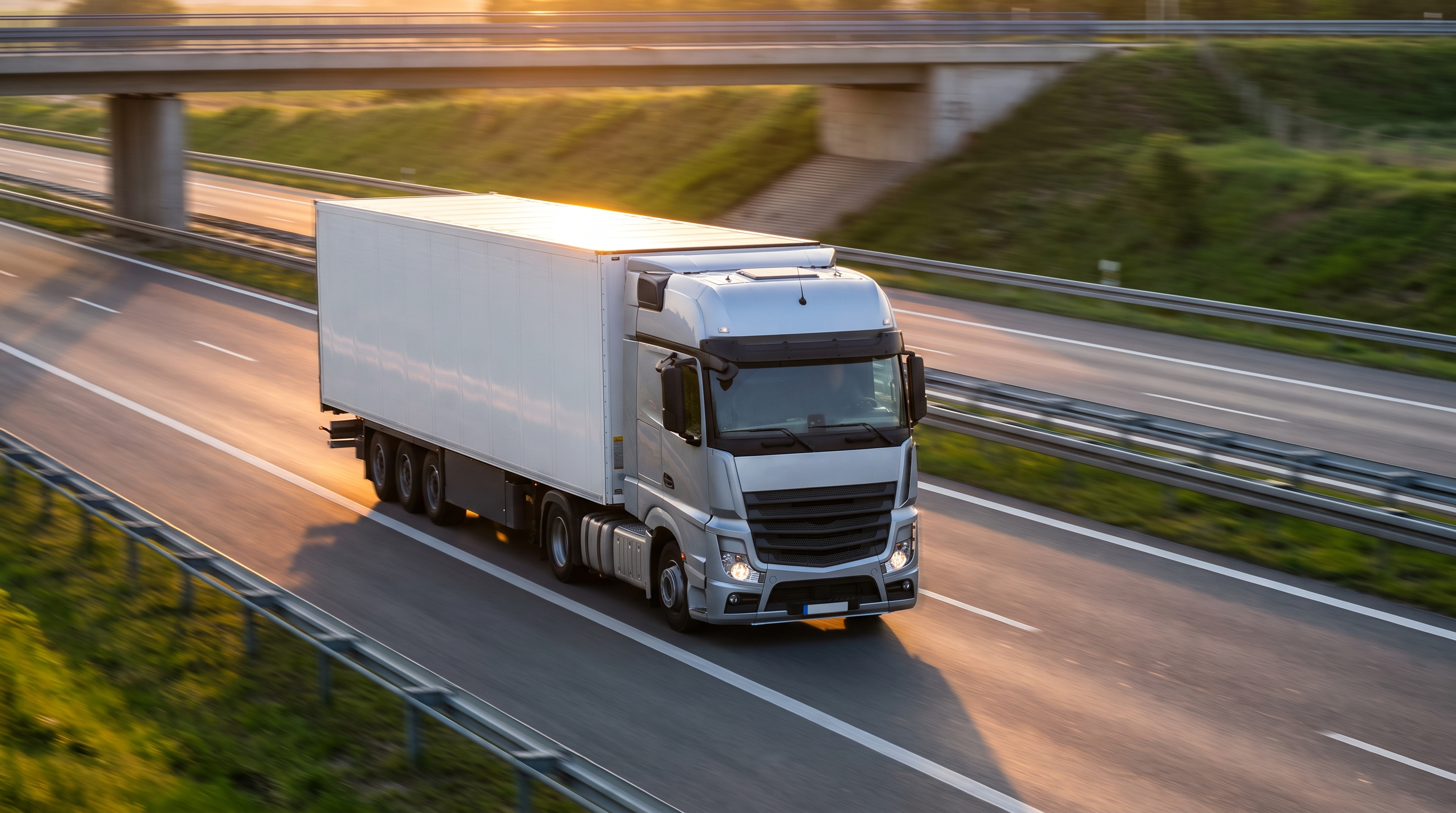
What groupage means on the France–Belgium route, and when it pays off
LTL (less than truckload) groupage means a carrier consolidates pallets from several customers heading in the same direction into one truck, instead of running a dedicated vehicle for every single shipment. You pay for the pallet positions and weight you occupy, not for the whole trailer.
It's a particularly good fit for France–Belgium: the two countries share a border and both sit inside the EU, Schengen and the eurozone, so cargo doesn't clear customs and there's no currency conversion to plan for — which means volume and shipping frequency are really the only variables driving price and timing. Groupage usually makes sense if you have:
- One to a handful of pallets per shipment that don't fill a full trailer;
- Regular but not daily volume — a weekly delivery to a distributor's warehouse in Belgium, for example;
- A flexible delivery date that lets your load slot into the next consolidated departure;
- A logistics budget where paying for unused truck space isn't an option.
If instead you're moving a bulky, fragile or high-value load against a hard deadline, a full truck (FTL) can end up cheaper and faster in practice, not just in theory — we cover the full comparison in how to choose between groupage and a full truck.
How the shipment works, step by step
Tell us the pickup and delivery points in France and Belgium, the pallet count or volume in m³, the type of cargo and your target date, and you'll get a preliminary offer in 15-30 minutes — no waiting days for a callback. Once confirmed, we collect the goods from your site, palletise and strap them if needed, issue the CMR consignment note, and slot the shipment into the next consolidated run to Belgium.
Because the route between two neighbouring countries is short, consolidation here takes less time than on longer EU lanes: our breakdown of what determines transit time across the EU, and how groupage compares with a full truck, is worth a look if you need to set expectations for your own customer. Payment is flexible — 10% to book, the balance due before unloading, so you're never paying the full amount upfront. Tracking is available throughout, so you always know where the shipment stands and can warn the receiving warehouse ahead of arrival.
Cargo security and CMR compliance
The obvious question with groupage is what happens to your pallet when it's sharing a truck with someone else's freight. The answer is proper consolidation and strapping. We palletise and secure each shipment so it doesn't sit in direct contact with other customers' goods and doesn't shift during loading or unloading at intermediate points, and every shipment travels under a CMR consignment note issued in line with the Convention on the Contract for the International Carriage of Goods by Road, which sets out clear carrier liability at every stage of the journey.
Layner Group operates to ISO 9001 certification and holds official road transport authorisations covering Poland and the EU, and our own fleet, from 1 to 24 tonnes, is matched to the real volume of each shipment rather than oversized "to be safe" — which keeps both cost and the risk of unnecessary handling down.
Why ship groupage France–Belgium with Layner Group
We run our own office in France — not a call centre on the other side of Europe, but a team that understands French shippers and regional warehouses and can confirm a pickup quickly. On top of that: over 10,000 commercial shipments completed across the EU and more than 5 years running lanes between Western and Eastern Europe, Belgium included.
- Route optimisation cuts empty mileage as well as transit time, which shows up directly in what you pay.
- Coverage across all 27 EU countries from a single point of contact — useful if Belgium is today's shipment and another EU country is next month's.
- Transparent payment terms: 10% to book, the rest before unloading, with no hidden charges for standard handling.
If France–Belgium is one lane among several you ship regularly, take a look at our LTL groupage service across Europe, saving up to 45% — France–Belgium runs as one of its busiest routes.
Ready to ship?
Send us the pickup and delivery points, pallet count and target date, and you'll have a preliminary quote in 15-30 minutes — no obligation, no hidden terms.
Need a shipping quote?
Reach out however suits you best — we reply fast and quote your route for free.