
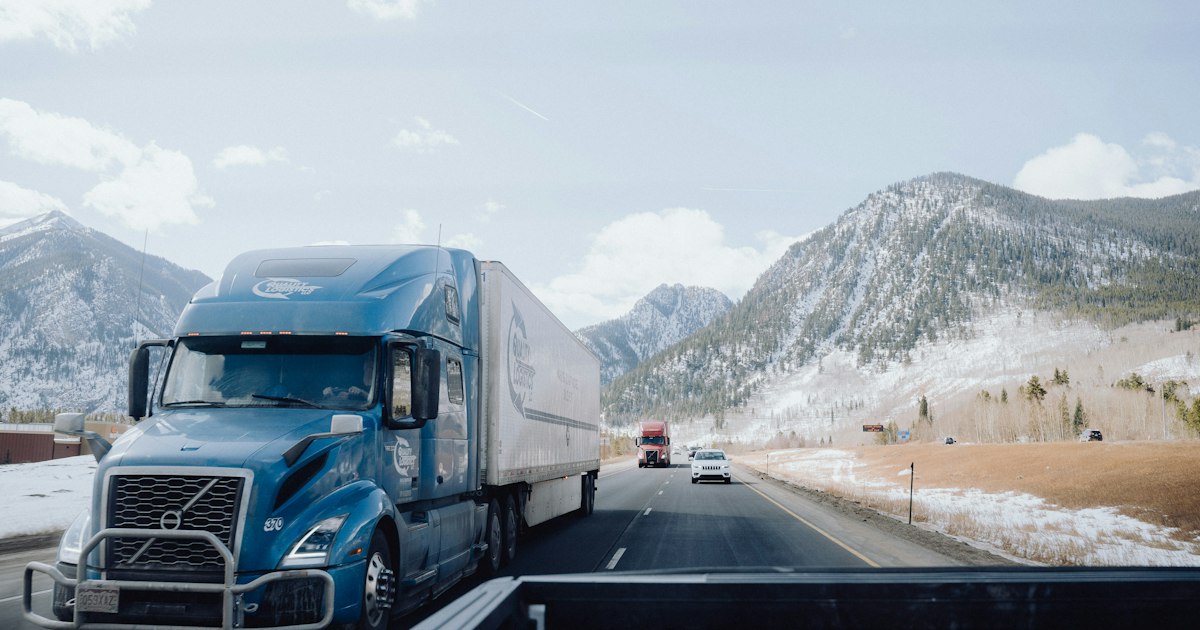
Barcelona to Lyon is just over 320 km; Madrid to Toulouse is roughly 700 km. Those are short distances for an international shipment, and yet Spain and France form the gateway between the Iberian Peninsula and the rest of continental Europe: virtually all road freight between Spain and northern Europe passes through this corridor in one way or another. Here's when groupage makes sense, when to book a full truck, and how long each option really takes.
What groupage and full truckload actually mean
Groupage (LTL) combines your shipment with other clients' cargo in the same truck: you pay for the space and weight you use, not the whole trailer. A full truckload (FTL) books the entire vehicle for one shipment, which travels direct with no consolidation stop. We cover the general logic behind that decision, and roughly what share of a trailer tips the balance toward FTL, in groupage or full truck: how to choose for your EU shipment. Here's how that logic plays out specifically on the Spain–France route.
Why the Spain–France corridor is different
Geography is the deciding factor here: Spain has only two land routes into the rest of the EU that don't involve sea freight, and both run through France, via the Basque/Atlantic coast or via Catalonia/the Mediterranean. That makes France the mandatory crossing point for nearly all Spanish road exports to Germany, Belgium, the Netherlands or northern Italy, and for traffic in the other direction too. According to Eurostat, international road transport accounted for 24.4% of total EU road freight in 2025, against 62.2% for domestic transport; cross-border lanes are a minority of total volume for most country pairs, but Spain–France is an exception simply because there's no land alternative.
The practical effect: with so much traffic concentrated on a handful of corridors (mainly the A-9/AP-7 on the Mediterranean side and the A-63/A-10 on the Atlantic side), groupage consolidators close departures very frequently on both axes, which keeps groupage competitive on time even for small shipments — something that isn't always true on routes with less return traffic.
How to decide: match your situation
| Your situation | Usually the better fit | Why |
|---|---|---|
| 1-5 pallets, flexible date | Groupage (LTL) | You pay for the space you use, not a half-empty trailer |
| Over a third of a trailer, or a fixed delivery date | Full truck (FTL) | Direct run, no waiting for consolidation |
| Fragile or high-value cargo | Full truck (FTL) | No handling at intermediate transfer points |
| A recurring weekly pallet between the same two cities | Groupage (LTL) | Fits reliably into this route's frequent departures |
| Light but bulky cargo (textiles, furniture, packaging) | Closer to FTL | You hit the volume ceiling before the weight one |
That last row deserves a word of explanation. Every truck has two separate ceilings — weight and volume — and neither is a matter of guesswork: both are set by EU rules on weights and dimensions of heavy-duty vehicles, laid down in Directive 96/53/EC. In practice, light but bulky cargo reaches the volume limit long before the weight limit, and at that point the "air" you're paying for in a groupage rate can start to approach the price of a dedicated truck.
Real transit times on this corridor
Exact timeframes depend on the specific pickup and delivery points, the season and the carrier's available capacity at that moment, so treat the following as indicative ranges, not a guarantee:
- Barcelona–Lyon or Madrid–Toulouse, full truckload (FTL), direct: typically 1 day from loading to delivery, including mandatory driver rest breaks.
- Madrid–Paris or Valencia–Marseille, FTL: typically 1.5-2 days, given the longer distance.
- Groupage (LTL) on any of these routes: add 1-2 days to the direct transit time for the consolidation window, depending on how fast the trailer fills and how many stops the route makes.
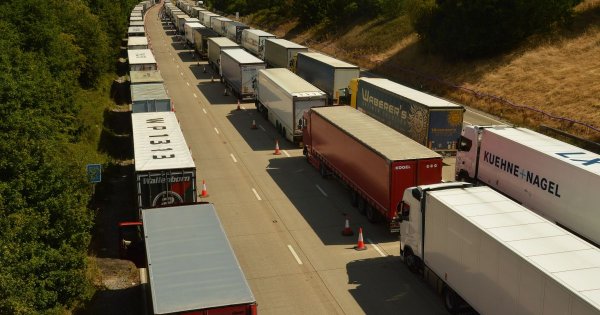
One factor specific to this corridor is worth planning around: during peak French holiday-traffic dates (summer, Easter) and during strikes or heavy-vehicle restrictions, the main border crossings can back up and add hours to the trip — something an experienced carrier on this route already factors into its planning. If your shipment can't absorb that margin, it's worth booking a dedicated truck and a pickup date with extra buffer from the start.
Paperwork either way
Spain and France are both EU member states, so an ordinary commercial shipment between them doesn't require customs clearance. What's typically requested at a roadside check or on delivery is:
- The CMR consignment note, the core transport document in international road freight, confirming the terms of carriage and the carrier's liability.
- A commercial invoice, with a description, quantity and value of the goods, even though no duty is charged.
- A packing list, if the shipment includes several different items: it speeds up checks on the road and at delivery.
The difference between the two formats isn't in which documents you need, but in how many times the cargo changes hands: in groupage, paperwork has to be in order at every intermediate transfer point, not just at the start of the route. If your cargo is classified as dangerous goods (ADR) or needs temperature control, say so when requesting a quote: it typically can't share space with a standard groupage shipment and, by default, is routed toward a full truck or specialised transport, regardless of volume.
Next step
At Layner Group we've been running routes across the EU for more than 5 years and have completed over 10,000 commercial transports, with our own fleet from 1 to 24 tonnes, offices in France and Poland, and coverage across all 27 EU countries. We operate under ISO 9001 certification, with CMR liability on every shipment and a preliminary quote in 15-30 minutes. Payment is flexible: a 10% deposit to book, the rest before unloading.
If your cargo moves regularly between Spain and France, or you want to compare how long each option would take on your exact route, our guide on EU transit times is worth a look too.
Need a shipping quote?
Reach out however suits you best — we reply fast and quote your route for free.





Comments
0Leave a comment
No comments yet. Be the first!