
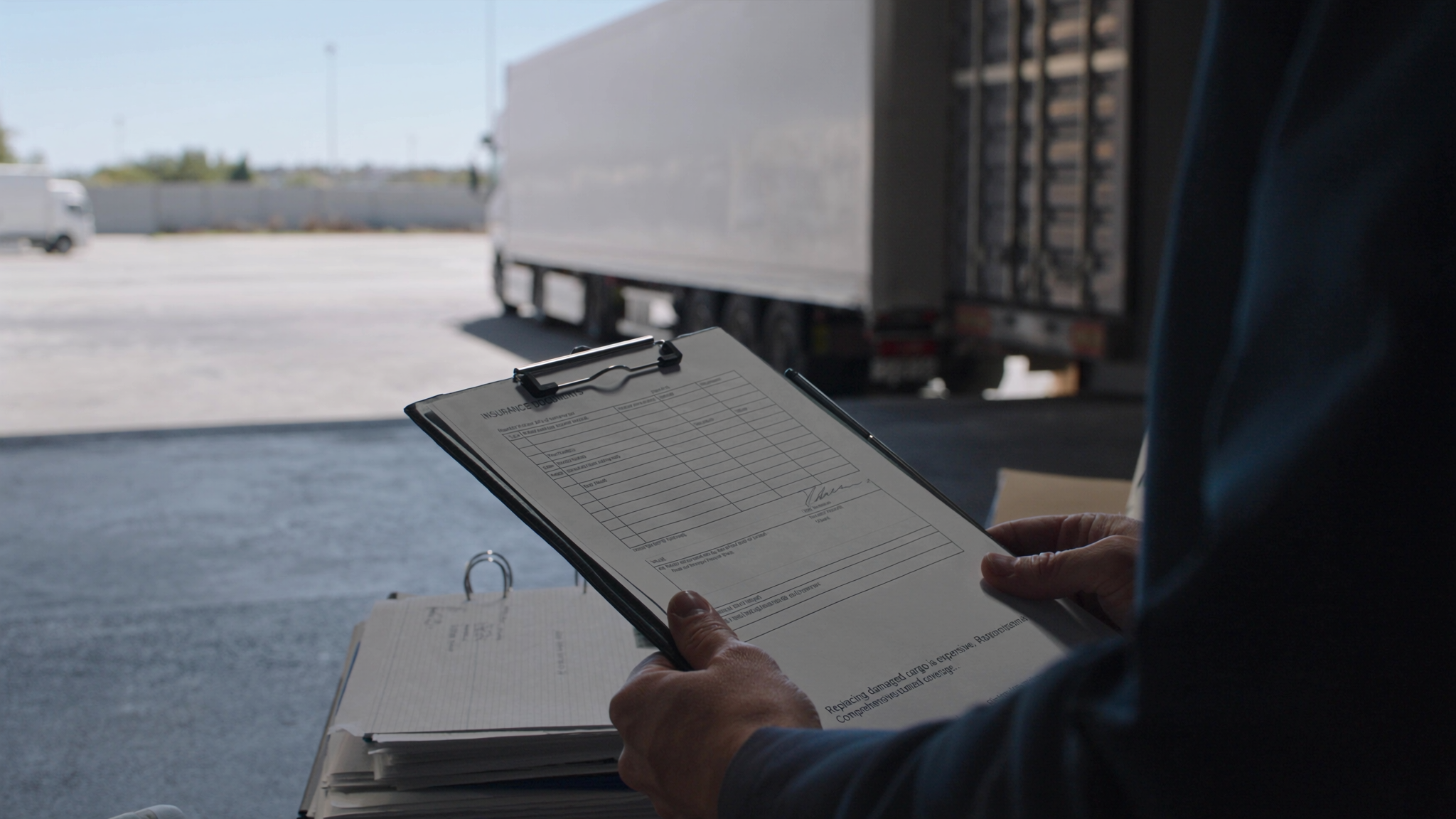
"Is my stuff insured?" is one of the first questions people ask before an international move, and the honest answer has two parts. Part one: yes, by default. Part two: default coverage isn't always enough, and knowing the difference before moving day saves a lot of stress later.
What CMR is, and why it applies automatically
The Convention on the Contract for the International Carriage of Goods by Road (CMR) was signed in Geneva in 1956 and has governed carrier liability on international road routes ever since. According to the United Nations Economic Commission for Europe's (UNECE) executive guide, the convention has been acceded to by 55 states, and it applies automatically to any international road carriage where the origin and destination are in two different countries and at least one is a contracting party. For a move from France to Poland, or from Spain to Germany, CMR carrier liability applies whether or not the contract mentions it by name — there is nothing extra for you to arrange.
What CMR actually covers
CMR sets the carrier's liability for loss or damage to goods while in transit. This is standard on every move Layner Group carries out and doesn't require anything extra from you. It covers the carrier's responsibility during transport — not the full replacement value of every item, particularly for high-value or irreplaceable goods.
Here is the detail that rarely gets explained upfront: CMR compensation is not calculated from an item's declared value, but from its weight. Under Article 23 of the convention — discussed, among other places, in Court of Justice of the EU case law published on the EUR-Lex portal — liability is capped at 8.33 Special Drawing Rights (SDR) per kilogram of gross weight lost or damaged, roughly €9-10 per kilo at current exchange rates.
When weight isn't a fair way to measure the loss
A per-kilo calculation works well for furniture, appliances and ordinary household goods, where value roughly tracks weight. It works badly for anything where the two are unrelated: antiques, art, jewelry, high-end electronics, wine collections, specialised equipment. A 3 kg painting lost in transit, for example, would receive CMR compensation of roughly €25-30 — nowhere near its real value if it's an original piece.
For these cases, it's worth arranging a separate all-risk insurance policy covering the item's actual declared value before the move, not after something goes wrong. If your shipment includes items like these, we offer reinforced-security transport for high-value cargo, with GPS tracking, sealed trailers, and guidance on additional coverage matched to your specific collection or equipment.
Packing and inventory are part of your insurance protection too
Few people connect packing with insurance, but it's one of the first things checked when a claim is reviewed. CMR carrier liability covers the cargo, but when fragile or high-value items are self-packed rather than professionally packed, insurers can — terms vary by insurer — dispute a claim if the damage is tied to how the item was packed. An inventory list matched to boxes, ideally with photos of condition before loading, is what turns a verbal "there was something valuable in there" into a document you can actually claim against. For more on what professional packing includes and how it protects your right to claim, see our guide to professional packing for an international move.
CMR vs. additional insurance: a quick comparison
| Factor | Standard CMR liability | Additional all-risk insurance |
|---|---|---|
| What it covers | Carrier liability for loss/damage in transit | The item's actual declared value |
| How compensation is calculated | 8.33 SDR per kg gross weight (~€9-10/kg) | Against a declared value agreed in advance |
| Do you need to arrange it | No, applies automatically | Yes, before transport starts |
| Best suited for | Ordinary furniture and household goods | Antiques, art, jewelry, electronics, wine |
Your car is a separate story
If a car or motorbike is moving with your household goods, its insurance and paperwork follow different rules that aren't tied to CMR directly. We cover this separately in our guide to shipping a car or motorbike abroad, including driving it yourself versus shipping it with the move and what each option costs.
How to reduce risk before it becomes a claim
- Photograph valuable or fragile items before packing, so their condition is documented.
- Flag high-value items explicitly when requesting your quote, so we can advise on the right coverage.
- Keep an inventory list matched to boxes, which speeds up any claim if something does happen.
- Choose professional packing over DIY for fragile or high-value items — it directly affects whether a claim gets accepted.
If something is damaged
Report it as soon as you notice it, ideally at delivery with photos and a note on the delivery documentation. The CMR convention itself sets short deadlines for formal notification: visible damage needs to be recorded at the point of delivery, and hidden damage needs written notice within a few days afterward; most claims under the convention lapse after one year. Exact deadlines and procedures depend on the specific policy and route, so we walk you through the relevant steps for your move rather than a generic script.
The bottom line
Standard CMR coverage is solid protection for a typical household move: it applies automatically, costs nothing extra, and is built for ordinary furniture and belongings. If your shipment includes antiques, art, high-end electronics, a wine collection, or anything whose value isn't reflected by its weight, ask about additional coverage when you request your quote — it's a five-minute conversation that avoids a much longer one later. Request a quote through the form on our site and you'll get a preliminary estimate in 15-30 minutes, or call us directly: Poland +48 575 725 571, France +33 7 813 848 63.
Need a shipping quote?
Reach out however suits you best — we reply fast and quote your route for free.






Comments
0Leave a comment
No comments yet. Be the first!