

Black Friday 2026 falls on November 27, followed by Cyber Monday on November 30, the December rush to Christmas, and the January sales. Every year the same pattern repeats: order volume spikes, truck capacity tightens, and transit times stretch out for any e-commerce business that didn't plan ahead. Here's a practical, phase-by-phase plan to keep your deliveries on schedule through peak season.
Why peak season strains EU shipping capacity every year
This isn't a one-off disruption — it's a predictable capacity squeeze, and the underlying demand keeps growing. According to Eurostat, 78% of EU internet users bought goods or services online in 2025, and 62% had done so within the three months before the survey. That is the baseline your November volume sits on top of.
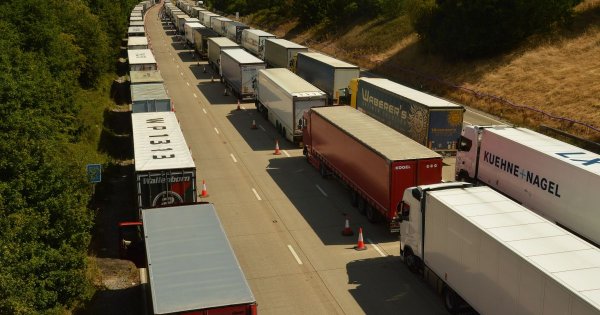
Between late October and the end of December, EU freight volumes can run well above a normal month, while the pool of available trucks, warehouse slots and customs staff stays roughly the same. Carriers allocate their limited fleet to the shippers who booked first. Businesses that call a week before Black Friday get whatever capacity is left — usually longer transit times, extra transshipments on groupage loads, or a flat refusal to take on new volume for the dates they need.
Add typical December congestion around major hubs, express couriers getting priority, and fewer working days before the holidays, and a three-day delay on the route quickly turns into a lost sale — or a wave of "where is my order" support tickets.
Phase 1 (2-3 months out): reserve transport capacity early
The single most important step is locking in capacity with your logistics partner before your competitors do. In practice, that means discussing expected November-December volumes back in August or September, confirming realistic transit times for your specific routes, and agreeing on shipping frequency.
Questions worth asking your partner at this stage:
- Do transit times hold during peak season, or do they extend?
- Are you getting guaranteed slots for your volume?
- How is peak-season pricing calculated, and when does it get locked in?
- How much extra buffer do you need for customs clearance if goods arrive from outside the EU?
If you ship from multiple warehouses or into several countries, confirm the schedule separately for each lane. It also helps to know what a realistic baseline looks like before you negotiate: our guide to transit times across the EU sets out what to expect outside peak, so you can tell a genuine peak-season buffer from padding.
Phase 2: groupage (LTL) or a full truck (FTL)
How you ship determines how exposed you are to someone else's schedule. Groupage (LTL) combines your freight with other shippers' cargo in the same trailer — cheaper for moderate volume, but it adds transshipments and makes you dependent on the truck filling up. During peak season, that can mean sitting an extra day or two waiting for a full load.
A full truckload (FTL) costs more per trip but runs on your schedule, with no waiting for other cargo and no extra handling.
| Criterion | Groupage (LTL) | Full truckload (FTL) |
|---|---|---|
| Best for | Moderate, steady volume | Sharp volume spikes at peak |
| Delay risk during peak | Higher | Lower |
| Cost per shipment | Lower | Higher |
| Schedule control | Depends on the load filling | Yours |
Rule of thumb: if your November volume runs more than double your usual month, price out FTL for at least your peak weeks — the extra cost per trip is often cheaper than missed delivery promises and returns. We go deeper into where the break-even sits in our comparison of groupage versus a full truck.
Phase 3: pre-position stock — don't rely on last-minute shipments
The most common peak-season mistake is holding minimal stock and planning to top up "on demand." In November and December, exactly those urgent top-up shipments become the weakest link — capacity for them is the hardest and most expensive to find.
What to do ahead of time:
- Move your core stock into an EU distribution warehouse before the peak starts, so customer orders ship from a nearby hub rather than through international transit;
- Size a separate safety stock for your bestsellers — those are the SKUs most likely to sell faster than forecast during peak weeks;
- Set up cross-docking with your logistics partner if your volume is too large to hold in long-term storage.
If you don't already have EU warehousing in place, this is the decision to make in September, not November. Our overview of e-commerce fulfilment in the EU explains what the setup involves and at what volume it starts paying for itself.
Phase 4: a backup plan for critical stockouts
Even with capacity booked and stock in place, exceptions happen — an unexpected spike on one SKU or a delayed shipment from a supplier. For that, you need a backup channel: dedicated urgent transport that can be requested on short notice, without waiting in the general groupage queue. A partner that quotes in 15-30 minutes rather than a full business day stops being a nice-to-have and becomes essential once peak season hits.
Phase 5: plan the January returns wave before it arrives
Peak season doesn't end when the last parcel is delivered. January is when the returns arrive, and cross-border returns are slower and more expensive to process than outbound shipments — they come back one parcel at a time, from many origins, often needing inspection and re-stocking before the item can be sold again.
Two things are worth settling in advance. First, the commercial side: EU consumers buying at distance have a statutory right of withdrawal under the Consumer Rights Directive (2011/83/EU), so a returns wave after Christmas is not a risk you can plan away — it's a certainty you plan for. Second, the logistics: agree with your partner now who collects returns, where they're consolidated, and how quickly they get back into sellable stock. Our guide to cross-border returns and reverse logistics in the EU covers how that flow is normally structured.
2026 peak season calendar: key dates to plan around
Black Friday 2026 lands on November 27, Cyber Monday on November 30, followed by the December run-up to Christmas and the January sales. In practice, that means booking transport capacity by September, having stock in your EU distribution warehouse by late October, confirming your backup transport plan before November, and having the returns process agreed before the end of December.
What to do right now
Peak season repeats every year in a predictable way — the delays aren't bad luck, they're the result of planning too late. Businesses that reserve transport 2-3 months out and pre-position stock closer to the customer get through November and December without missed deadlines. Layner Group quotes peak-season transport capacity in 15-30 minutes and runs its own fleet from 1 to 24 tonnes across the EU, including e-commerce distribution across the European Union. Reserve your transport now and lock in your slot before your competitors do — tell us your volume and route and we'll match a solution to it.
Need a shipping quote?
Reach out however suits you best — we reply fast and quote your route for free.






Comments
0Leave a comment
No comments yet. Be the first!