
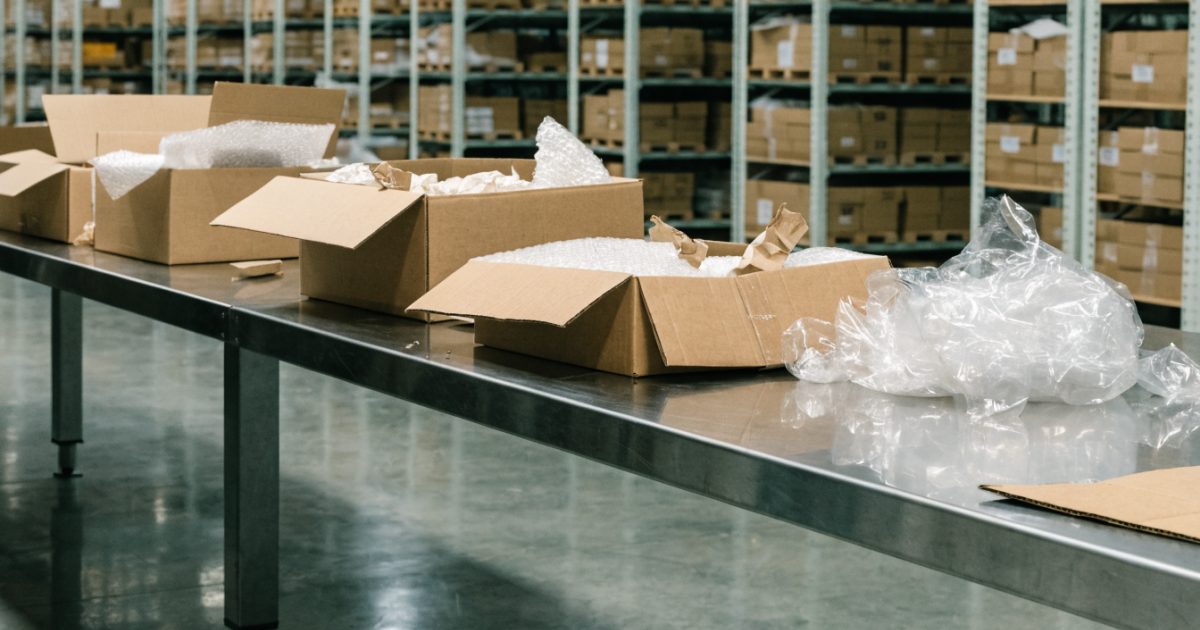
A return costs more than the delivery that caused it. The reverse flow moves one parcel at a time, on no schedule and often in damaged packaging, so handling a single returned item can cost several times what it cost to deliver. For a retailer selling across several EU countries this is not a rounding error: in some categories returns reach a third of orders. Here is what drives the cost of reverse logistics, where it can be cut, and what to do about VAT and customs.
Why the reverse flow costs more
Outbound delivery is predictable: you know the volume, the route and the date. A return is none of those. It appears one at a time, from a random address, on a random day. That removes the single biggest source of savings in logistics — consolidation.
- No volume. One box travels at one-box rates, not pallet rates.
- No schedule. Collection has to be arranged for a specific address and date.
- Inspection required. Every item must be examined, judged, and either returned to stock or written off.
- Packaging is compromised. Goods often cannot be resold without repacking.
The practical conclusion: savings in reverse logistics do not come from negotiating the per-parcel rate. They come from reducing the number of single-parcel movements.
Three models for handling EU returns
1. Everything back to the central warehouse
All returns travel back to the despatch point. Simple to manage and the most expensive option when you sell in several countries: every box crosses half a continent at international rates.
Suits: low return volumes, high-value goods where inspection expertise matters.
2. Local collection points and consolidation
Each selling country has an address where the customer returns goods at a domestic rate. Once a week the accumulated boxes travel to the central warehouse as one consignment. The international leg goes from dozens of shipments to one.
It is the same principle as cross-docking, running in reverse. Usually the most economical model once you sell regularly in three or more countries.
Suits: medium to high volumes, several countries, goods that do not need immediate inspection.
3. Local disposition without shipping back
Some returns are not worth moving at all: the cost of the return leg exceeds the residual value of the goods. The decision is then taken in-country: discounted resale, transfer to a partner, or disposal.
Suits: low-value items, bulky goods, end-of-season stock.
VAT and customs
Inside the EU there is no physical customs, but a return has tax consequences: it means correcting the invoice already issued and, with it, the VAT. The mechanics depend on how you declare your sales — in particular whether you use OSS — and that is a question for your accountant rather than your carrier.
When goods come back from outside the EU, customs re-enters the picture. The key point: goods previously exported can be re-imported without duty being charged again, but only where you can document that these are the same goods. In practice that means keeping the original export declaration number and invoice from the outset, not hunting for them afterwards.
What belongs in the carrier agreement
- Collection from the customer's address priced as its own line — it is the most expensive operation in the chain.
- The accumulation window at the local point: weekly, fortnightly. A longer window makes the leg cheaper but delays goods returning to sale.
- Who bears responsibility for condition on the return leg, and how damage is recorded at receipt.
- Paperwork. A return movement takes its own consignment note; it is not a continuation of the outbound one.
- Peak periods. Returns spike after sales events — see our note on peak season.
Where money is usually lost
Returns travelling internationally one by one. The most common and most expensive mistake. A local collection address typically pays for itself at around twenty returns a month.
Goods sitting uninspected. Until an item is examined it is neither on sale nor written off — that is frozen cash. Handling time deserves the same measurement as delivery time.
No "do not return" rule. For cheap items the return leg often costs more than the residual value. Work out the threshold once and write it into the policy.
Packaging not designed for a second journey. A box that cannot be resealed guarantees damage on the way back.
Where to start
Measure two things: the return rate per selling country, and the average cost of processing one return from collection to back-on-sale. If more than twenty returns a month come from one country, local consolidation is almost certainly cheaper than direct shipments. Send us your sales geography and volumes: a preliminary calculation comes back within 15–30 minutes.
Need a shipping quote?
Reach out however suits you best — we reply fast and quote your route for free.



Comments
0Leave a comment
No comments yet. Be the first!