

A move from Germany to the Netherlands is one of the shortest international routes in Europe, but that doesn't remove the paperwork: your belongings cross the border freely, while residence registration, the car and any pet each run on their own clock. Here's the full sequence — what's automatic and what actually needs your attention.
What you don't need: customs
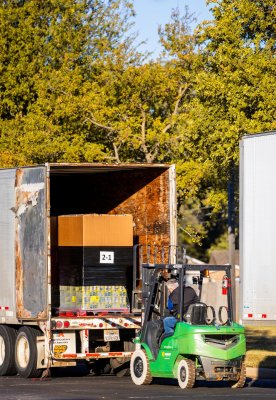
Germany and the Netherlands are both EU member states, so personal belongings cross the border with no customs clearance, declaration or inventory to file with any authority. The truck loads in Germany and unloads in the Netherlands, and the border is a formality. Everything below concerns the paperwork that follows you, not your furniture.
Registering your residence in the Netherlands
For the first three months, no EU country can require a residence document from you, though some ask you to report your arrival. After three months, the Netherlands may require you to register with the local municipality (inschrijving at the gemeente) and receive a registration certificate. According to the European Commission's Your Europe portal, the certificate must be issued immediately, not weeks later, and cannot cost more than an identity card for a Dutch national. You can be fined for not registering, but not expelled for that alone. What you need to show depends on your status: employees present a certificate of employment, the self-employed proof of their status, pensioners and students comprehensive health insurance plus sufficient resources. Confirm the exact deadline and document list with your specific gemeente, since they vary by town.
The car: the deadline most people miss
If the move is permanent and your car comes with you, it needs to be registered in the Netherlands and the relevant taxes paid there. There's no single EU rule — each country sets its own deadlines and change-of-residence exemptions, and those have to be claimed in time or they're lost. The official guidance on registering a car in another EU country defines normal residence as living somewhere more than 185 days a year. Cross that line and the obligation applies whether or not you've dealt with it, and you can be fined for late registration, unpaid taxes, or driving on German plates without proof your normal residence is still in Germany. Whether the car drives itself, travels on a car-carrier, or rides inside the removal truck is a separate decision with real cost differences — we compare all three in our guide to vehicle transport during an international move.
The pet: start eight weeks out, not two
Dogs, cats and ferrets travelling between EU countries need a European pet passport, and it isn't instant. Per the EU rules on the Your Europe portal, the animal must be microchipped before its rabies vaccination — a vaccination given before the microchip doesn't count. The minimum age for a first vaccination is 12 weeks, and you then need to wait at least 21 days before travelling. The European pet passport is the single document valid across the EU, and with it you can bring up to five pets per traveller. The practical takeaway: book the vet and check microchip and vaccination status eight weeks out — it's the one deadline on this list that can't be compressed.
The timeline that actually works
| When | What |
|---|---|
| 6-8 weeks before | Check the pet's microchip and vaccination status; book the vet. Request moving quotes. |
| 4 weeks before | Confirm volume and dates with the carrier. Decide how the car travels. |
| 2 weeks before | Pet passport issued. Gather employment or study documents for registration. |
| Moving week | Loading in Germany, transit, delivery in the Netherlands. |
| First 3 months | Inschrijving at the municipality. Start the car re-registration with margin. |
The move itself: groupage or a dedicated truck
Germany and the Netherlands are neighbours with a dense road network, so the drive itself takes anywhere from one to a few days depending on your exact addresses and format. Groupage shares the truck between several clients and costs less, but delivery lands within a window; a dedicated truck costs more but runs direct with a fixed date — worth it if your move-in date in the Netherlands can't shift. The variables that set the final price are the same on any European route — we break them down in what determines the price of an international move. The full door-to-door process for this corridor is on our Germany-Netherlands international move page.
Where to start
The single most useful thing to do this week is call the vet and check the pet's microchip and vaccination dates, if a pet is travelling with you — it's the one deadline on this whole list that can't be compressed. Everything else — registration, the car, the truck — can be arranged in parallel. Layner Group runs the Germany-Netherlands corridor with its own fleet from 1 to 24 tonnes, out of offices in France and Poland, ISO 9001 certified with CMR liability on every trip. Send us your volume and both addresses and a preliminary quote comes back within 15-30 minutes.
Need a shipping quote?
Reach out however suits you best — we reply fast and quote your route for free.



Comments
0Leave a comment
No comments yet. Be the first!