
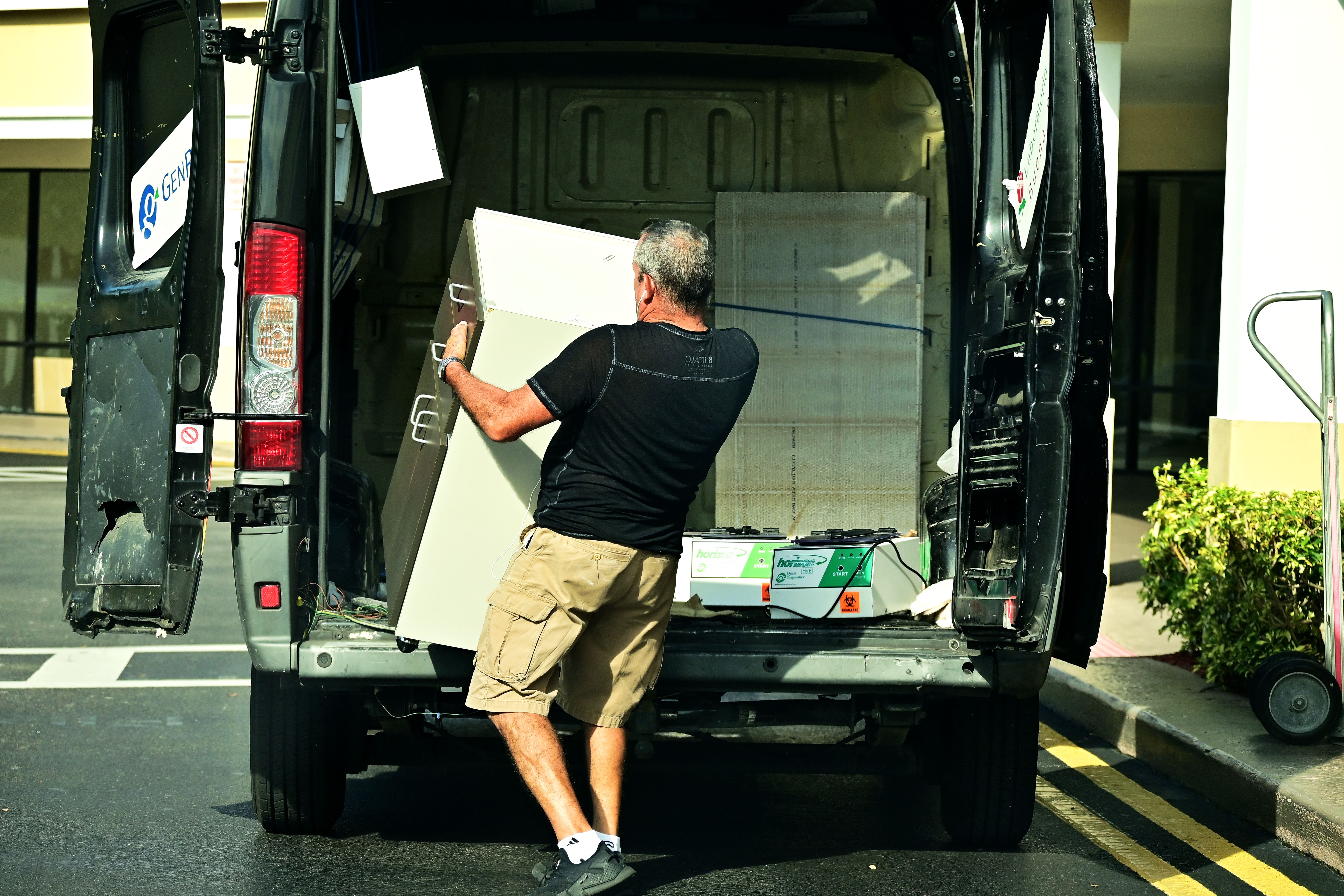
Moving from Austria to Spain doesn't involve customs at all: both countries sit inside the EU single market, so your household goods cross the border without any import declaration. What it does involve are three deadlines that have nothing to do with each other but all start ticking the moment you arrive: registering your residence in Spain, registering your car if the move is permanent, and, if you're bringing a pet, a veterinary calendar that has to start weeks before the truck is even loaded. Here's each one, with the official sources behind them, plus a practical timeline so nothing gets left to the last week.
What you don't need: customs paperwork
Start with the good news. Because this is a move inside the single market, your furniture, appliances, clothes and personal belongings don't require an import declaration, customs duties or VAT on entry into Spain. There's no EORI number to apply for and no customs transit document to fill in — those obligations only kick in when goods are entering the EU from outside it. That's a real simplification compared with, say, a move from the UK or Switzerland, where household goods still have to be declared.
That said, keep a detailed inventory of what's being shipped, with photos of anything valuable, and hold onto the transport contract (the CMR consignment note if a company is moving you). It isn't a customs requirement, but it's the first thing an insurer asks for if something gets damaged in transit, and it speeds up any routine roadside check along the way.
Registering your residence in Spain
This is the first real deadline. Under EU free-movement rules, during your first three months in another member state you cannot be required to hold any residence document at all — you're free to settle in, look for housing and start organising your life in Spain without any formality. After that window, Spain can require registration, and in practice it does: as an EU citizen you need to register with the Central Register of Foreign Nationals and get a residence registration certificate (locally known as the "green certificate", or certificado de registro), issued by the National Police or your province's foreigners' office.
The European Commission's official page on registering residence is worth reading closely on two points that come up constantly when officials try to complicate things: the certificate must be issued immediately — there's no legal basis for "come back next month" — and it cannot cost more than what Spanish nationals pay for their own ID card. If a police station or town hall tries to charge you a disproportionate fee, you have solid legal ground to push back.
Running alongside this, and this is a Spanish quirk that catches many newcomers off guard, there's the padrón: registration on the local municipal roll (empadronamiento) at the town hall where you actually live. It's a separate procedure from EU residence registration — handled by the municipality, not immigration authorities — but in practice it's unavoidable: you'll need it to enrol children in school, register with the public healthcare system, get a Spanish driving licence, or simply prove where you live. There's no single statutory deadline for it, but the sooner you do it after moving in, the sooner everything else that depends on it unblocks. You'll normally need your rental contract or property deed and your ID document; each town hall publishes its own exact list on its website.
The car: when it needs Spanish plates
The second deadline centres on the vehicle, and the concept the EU uses to decide it is precisely defined: normal residence. According to the European Commission's official guidance on registering a vehicle, your normal residence is where you usually live, work or have family, and "usually" is defined as more than 185 days per calendar year. If your move to Spain is permanent and you cross that threshold, you're required to register the car in Spain and deregister it in Austria, typically within 30 days of Spain becoming your habitual residence (confirm the exact deadline with your local Jefatura de Tráfico before it lapses, since it can vary).
The Spanish process has several moving parts worth gathering in advance: the vehicle's ownership title, the Austrian technical documents (Zulassungsbescheinigung), the Austrian deregistration certificate, a Spanish roadworthiness inspection (ITV, the local equivalent of what you already know at home), and, in most cases, payment of the registration tax (Impuesto de Matriculación) and the municipal circulation tax. If you handle it yourself, budget several weeks between booking an appointment at Tráfico, the technical inspection and issuance of the new plates; many expats hand it to a local gestoría just to avoid burning workdays in queues.
If your stay is temporary — a one-year work contract with a planned return to Austria, say — and you stay under 185 days or keep your normal residence in Austria, you can keep driving on Austrian plates without re-registering, though it's worth carrying documentation proving that temporary status in case of a roadside check. Whichever situation applies, the physical transport of the vehicle itself — on its own wheels, on a car-carrying platform, or loaded inside the same moving truck — deserves its own planning; we cover the options, costs and paperwork a carrier will ask for in our guide to shipping a car or motorbike abroad.
The pet: the clock starts eight weeks out
If you're travelling with a dog, cat or ferret, this is the deadline people most often underestimate, because it doesn't depend on your organisational skills — it depends on a biological calendar that simply can't be rushed. Per the EU's official rules on travelling with pets, the sequence matters and can't be reversed: the microchip has to go in first, and only afterwards can the rabies vaccination be given; vaccinate before chipping and the shot simply doesn't count, meaning you'd have to redo it. The vaccine can only be administered once the animal is at least 12 weeks old, and from the vaccination date you must wait a minimum of 21 days before travelling.
Add it up: if your pet has neither chip nor vaccine yet, you're looking at five to six weeks minimum before it can travel, assuming it's already old enough. That's why the comfortable, realistic margin is eight weeks before the move — enough slack to absorb a delayed vet appointment or a chip that has to be re-scanned because it didn't read properly, without the rest of the move hinging on everything going right the first time. With the chip and vaccine in order, your vet issues the EU pet passport, a document with a standard format valid across the whole bloc, including the Austria-Spain border, with no additional quarantine checks. The rules allow up to five pets per traveller without extra paperwork; more than that requires additional justification, such as entering a dog show.
One point worth clearing up because it causes real confusion: unlike the UK, Ireland, Finland, Malta or Norway, Spain doesn't require tapeworm (Echinococcus) treatment for dogs entering from another EU country, so coming from Austria you can skip that step entirely. Even so, check with your vet whether your pet is due for its routine boosters (distemper, parvovirus) before travel — an animal stressed by the move is more vulnerable if its ordinary vaccination schedule has slipped.
Timeline at a glance
| When | What to do |
|---|---|
| 6-8 weeks before | Microchip and rabies vaccination for the pet (if not already done); first contact with the moving company to lock in a date; gather the car's paperwork (technical certificate, ownership title). |
| 4 weeks before | Confirm the pet's EU passport with your vet; request the vehicle deregistration certificate in Austria if the move is permanent; start packing rarely-used items. |
| 2 weeks before | Confirm the final inventory with the carrier; gather employment contracts, payslips or a company letter proving the reason for the move (useful for residence registration); locate the foreigners' office and town hall at destination. |
| Moving week | Loading and transport; carry passports, car documents, the pet passport and the CMR transport contract with you, not in the truck. |
| First 3 months in Spain | Register on the padrón at the town hall; apply for the EU residence registration certificate before the three months run out; register the vehicle if you'll exceed 185 days of normal residence in Spain. |
The move itself: groupage or a dedicated truck
The distance from Vienna to Spain isn't short: about 1,550 km by road to Barcelona, and around 2,100 km to Madrid, crossing half of Europe through Germany, France and the Pyrenees. That distance is exactly why it's worth deciding properly between groupage and a dedicated truck before requesting a quote.
Groupage — your load shares truck space with other clients heading a similar way — makes sense for a small or medium household with some flexibility on delivery date, since the truck spreads several loads along the route. A dedicated truck is the right call for a full house, for fragile or high-value items you'd rather not share space with someone else's cargo, or when you need a fixed delivery date tied to, say, a new job starting or kids beginning school. Either way, the price hinges on very concrete variables — volume in m³, weight, access at both ends (lift, floor, distance from parking to the door), date and season — which we break down in our guide to what determines the price of an international move, useful for getting a realistic range before requesting a formal quote.
One practical point for a route this long: always insist the carrier operates under the CMR Convention on international road liability, and get it written into the contract. It's the guarantee that if something is damaged or lost over the 15-20+ hours on the road, there's a clear legal framework to claim against — not just a verbal promise.
Where to start
With more than 1,500 residential moves handled and our own fleet from 1 to 24 tonnes covering all 27 EU countries from offices in France and Poland, Layner Group runs the Austria-to-Spain move door to door: pickup, professional packing, CMR-covered transport and delivery with reassembly at destination. We operate under ISO 9001 certification and hold the required EU transport authorisations, and we issue an indicative preliminary quote in 15-30 minutes so you can plan the rest of your deadlines — residence, car, pet — against a real budget from day one.
If your route is specifically Austria-Spain, we have a dedicated page covering the door-to-door service for this corridor: international move Austria-Spain door to door. Payment is structured flexibly, with a 10% deposit and the balance due before unloading, with no last-minute surprises.
Need a shipping quote?
Reach out however suits you best — we reply fast and quote your route for free.








Comments
0Leave a comment
No comments yet. Be the first!