
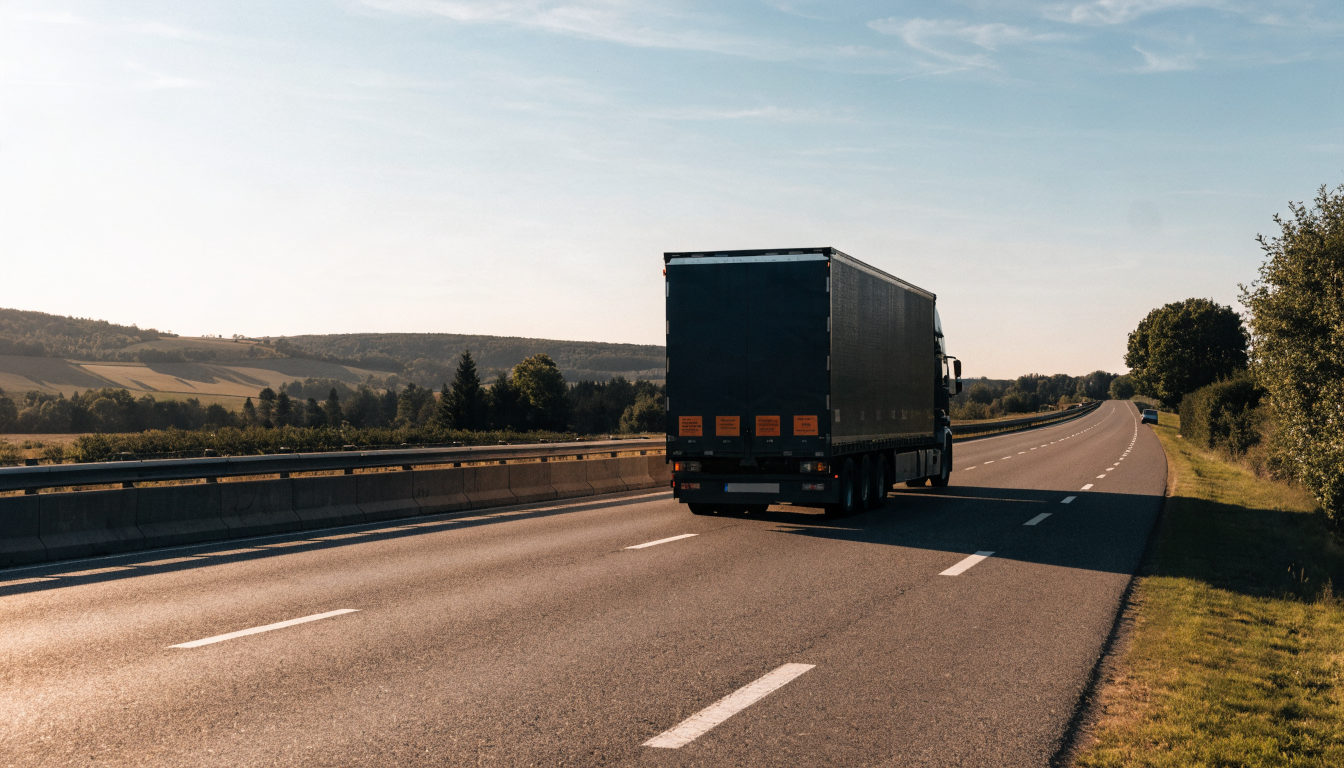
If your business ships lithium batteries, aerosols, paints, chemicals, or any other substance classified as dangerous, road transport within the European Union falls under the ADR agreement. It's not just extra paperwork: a misclassified product or one missing document can leave a truck sitting at a roadside check or a border crossing for hours. This guide covers what ADR actually requires, which documents you need, and the mistakes that most often delay or fine an ADR shipment.
What ADR is and when it applies to your cargo
ADR (the European Agreement concerning the International Carriage of Dangerous Goods by Road) governs road transport of hazardous substances and articles across Europe. It classifies goods into 9 classes by risk type: explosives, gases, flammable liquids and solids, oxidising substances, toxic and infectious substances, radioactive material, corrosives, and more. Not every dangerous goods shipment triggers the full rulebook — limited and excepted quantity thresholds simplify requirements when your volume is small. Before booking transport, the first step is classifying the product correctly: UN number, class, and packing group. If you're unsure, ask the manufacturer or supplier — it's normally listed on the Safety Data Sheet (SDS).
Mandatory documentation for an ADR shipment
Every dangerous goods consignment must travel with a set of documents the driver can produce at any checkpoint:
- Shipper's dangerous goods declaration, with UN number, proper shipping name, class and packing group, and quantity.
- Written instructions for emergencies (the "ADR instructions in writing"), in a language the driver and transit countries understand.
- Driver's ADR training certificate, valid and matching the class being carried.
- Vehicle approval certificate, when the tank or cargo type requires one.
- Copy of the carrier's transport authorisations.
An expired document — the driver's certificate especially — is one of the most common reasons a fully well-classified load still gets held up.
Vehicle, packaging and labelling requirements
The vehicle needs the standard orange-plate marking and, depending on the class, panels showing the hazard identification number and UN number. On-board equipment typically includes reflective vests, wheel chocks, fire extinguishers, a torch and spill-containment material, among other items specific to the load. Packaging must be UN-approved for dangerous goods, with the correct hazard labels visible and unobstructed. Stowage matters too: keeping incompatible substances apart (oxidisers next to flammables, for instance) is a safety requirement, not just a box to tick.
The mistakes that most often delay or fine an ADR shipment
- Incorrect product classification: the wrong UN number or packing group invalidates everything that follows.
- Expired driver certificate, or one for the wrong class of goods being carried.
- Missing written instructions in the right language for the route.
- Non-UN-approved packaging or damaged, illegible hazard labels.
- Exceeding quantity thresholds without applying the extra requirements that trigger (dedicated tank vehicle, escort, tunnel restrictions).
- Not checking tunnel and urban restrictions that apply to ADR vehicles on certain routes.
Most of these are avoided with one habit: sort out classification and documentation before booking the transport, not on the day of loading.
Indicative cost of ADR transport across Europe
There's no flat rate: cost depends on the ADR class, quantity, distance, whether a dedicated vehicle is needed or the load fits ADR groupage, and whether the route crosses zones with special restrictions. As a rough benchmark, ADR transport typically runs 15-40% above the same route for conventional freight, mainly due to the approved vehicle, certified driver and required safety equipment. For your specific route and volume, the reliable way to know is to request a calculation with the actual cargo details.
How Layner Group handles it
Layner Group moves dangerous goods across the entire European Union with ADR-certified drivers, under ISO 9001 certification, and CMR compliance on every shipment. We check classification and paperwork before confirming the route, so there are no surprises at a roadside check. With over 10,000 commercial shipments completed and an own fleet from 1 to 24 tonnes, we match the vehicle to your actual load — you don't pay for space you don't need. You'll get a preliminary quote in 15-30 minutes, with flexible payment: a 10% booking deposit and the balance before unloading.
Next step
If you need to move dangerous goods across Europe, tell us the ADR class, quantity and route, and we'll come back with a clear calculation — with the paperwork already sorted from day one.
Need a shipping quote?
Reach out however suits you best — we reply fast and quote your route for free.


Comments
0Leave a comment
No comments yet. Be the first!