
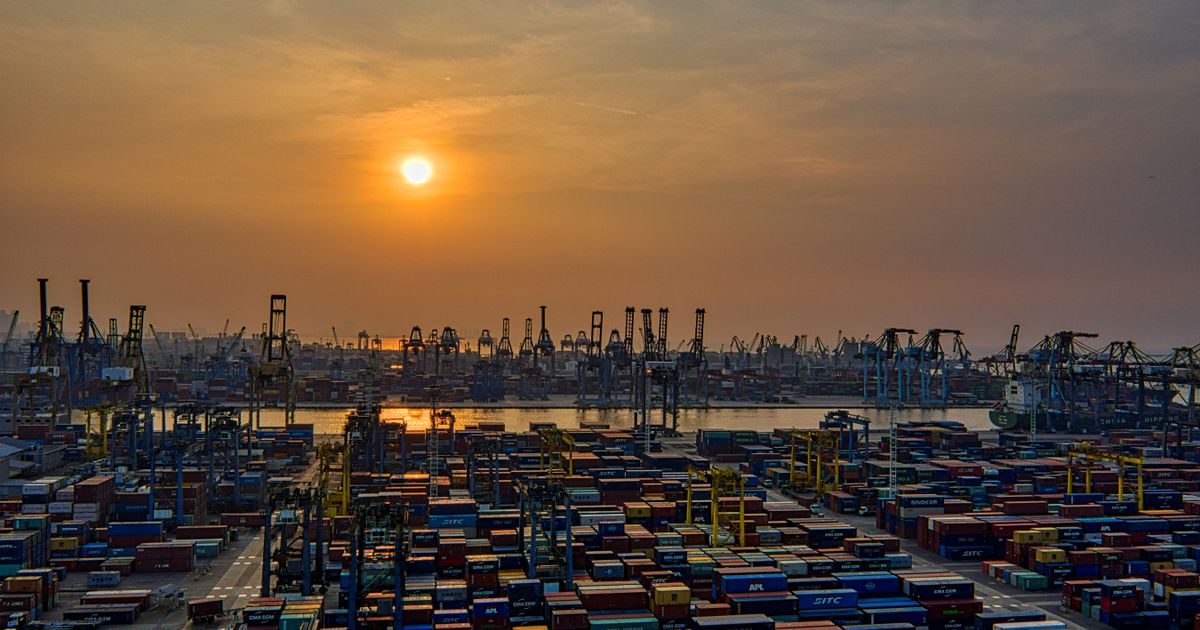
Belgium and the Netherlands share one of the shortest, busiest border crossings in Europe: from Antwerp to Rotterdam is a matter of hours. Because of that, it's tempting to assume the groupage (LTL) vs dedicated truck (FTL) choice barely matters here — in reality it still affects your price per m³ and your timeline, even over such a short distance.
When groupage is the better call
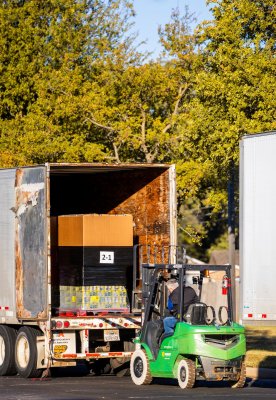
For volumes up to around 10 m³ (a handful of pallets, boxes during a studio move, a sample shipment) a dedicated truck is simply running mostly empty. Thanks to the short leg and the high density of freight flow between the Belgian and Dutch ports and industrial zones, consolidated runs depart practically every day, and cargo rarely waits long to be matched with a compatible load. That makes LTL a sensible choice for regular small shipments and for corporate clients who don't want to pay for idle transport capacity on such a short leg.
When you need a dedicated truck
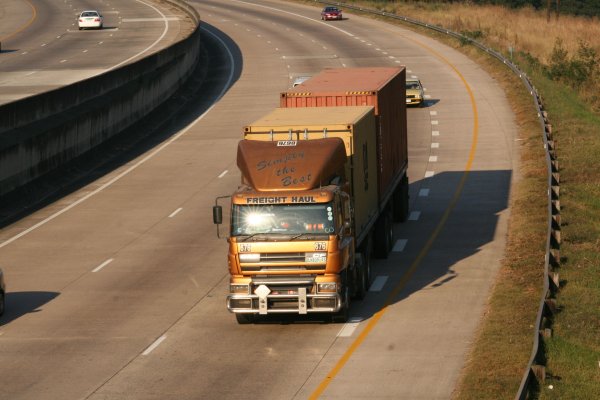
FTL earns its cost once the load is close to a full truck (roughly 12-13 pallets or more), once the delivery slot has to be precise (a production line, a just-in-time warehouse schedule), or once the goods need special handling (temperature control, oversized cargo). For large production batches moving between Belgian and Dutch plants, a dedicated truck is the norm rather than the exception.
What the industry statistics actually show
In its road freight statistics, Eurostat consistently publishes the share of journeys run below full capacity compared with fully loaded runs, and that ratio shifts from country to country and year to year. The current figures on load factors and empty-running shares are published in Eurostat's road freight transport statistics: Eurostat — Road freight transport statistics. For the Belgium-Netherlands corridor specifically, the takeaway is simple: density and departure frequency here are higher than on most intra-European routes, so groupage rarely costs you time.
The technical limits that apply either way
Whichever you choose, the same EU weight and dimension rules for commercial vehicles apply: a standard five-axle articulated truck is capped at 40 tonnes gross weight and 16.5 metres in length, set out in Directive 96/53/EC: EUR-Lex — Directive 96/53/EC. For FTL this simply caps what a single run can carry; for LTL it caps how many separate consignments can be combined into one load.
Timelines on the Belgium-Netherlands route
Distance barely matters here — both LTL and FTL usually arrive within one to two working days. The gap in timing comes from scheduling around consolidated departures (your cargo may have to wait for a slot if a run is already full) and from border-crossing checks during peak hours.
How to choose: a short checklist
Groupage if your volume is under about 10 m³, your schedule is flexible, and cost per m³ matters most. A dedicated truck if your load is close to a full truck, the delivery date is fixed, or the cargo needs special handling. On the Belgium-Netherlands leg both options are realistic on timing, so the decision almost always comes down to volume and budget. The general criteria for choosing between these formats are covered in more depth in Groupage or full truck: how to choose for your EU shipment.
If you need a recurring flow
For corporate clients with regular shipments on the Belgium-Netherlands route, it's worth comparing the cost of separate groupage shipments against a fixed weekly or monthly FTL run: once you're consistently moving more than 10 m³ a week, the dedicated option usually ends up cheaper, gives you a predictable schedule, and your own pickup window instead of a consolidated carrier's timetable. For steady-volume deliveries, see FTL Belgium–Netherlands, full truckload without transhipment.
Need a shipping quote?
Reach out however suits you best — we reply fast and quote your route for free.







Comments
0Leave a comment
No comments yet. Be the first!