
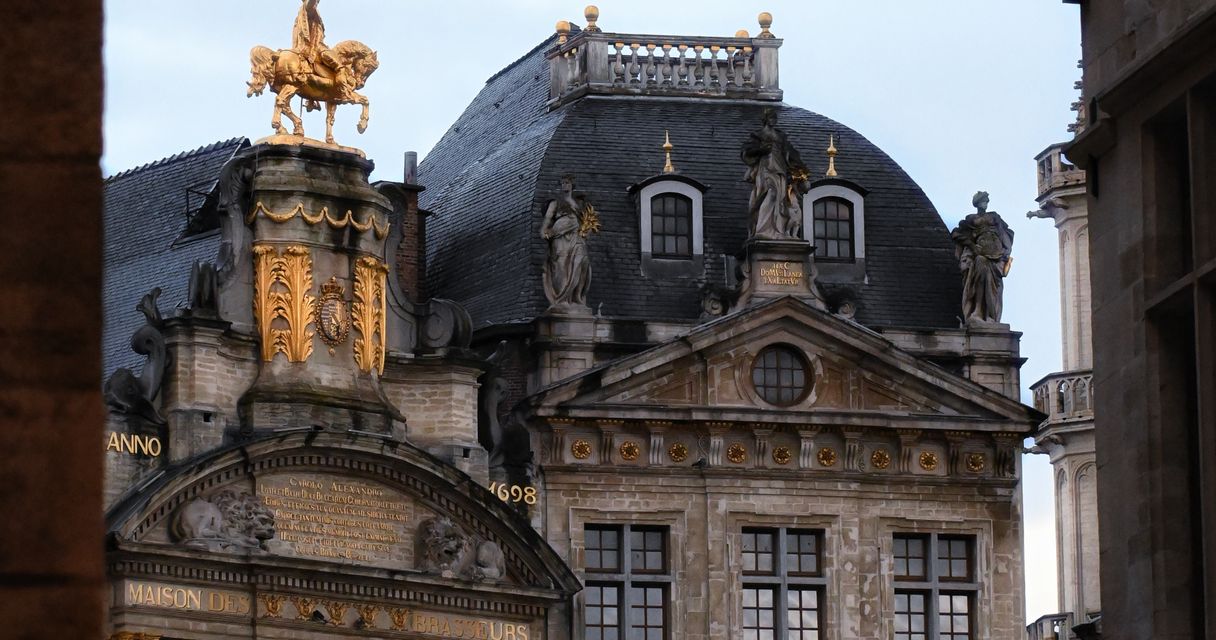
Moving to Belgium from another EU country comes down to three steps you cannot skip: registering at the commune (town hall) within three months of arriving, joining a health insurance fund (mutualité / ziekenfonds) to get compulsory health cover, and, if you bring your car, re-registering it in Belgium after a technical inspection. This guide walks through each step in order, with the official sources, and then covers the practical side of the move itself: narrow houses, parking the truck and timing.
Before you leave: what to prepare
As an EU citizen you need no visa and no work permit. But commune registration works on a file of documents, and since 1 September 2025 the application must be complete when you submit it. Gather before you go:
- a valid passport or national ID card;
- proof of your situation in Belgium: employment contract, self-employed registration, enrolment at a school or university, or proof of sufficient means and health insurance;
- your lease or the deed for the property you bought;
- for family members moving with you: birth or marriage certificates, translated if needed.
Moving to Brussels for a job at an EU institution or an international organisation? Your registration may follow a separate route through your employer, so check with its HR department before following the steps below.
Step 1: registering at the commune (within 3 months)
If you are staying longer than three months, you must report to the town hall where you live no later than the end of those three months, according to the Belgian Interior Ministry. Registering late can lead to a fine. The process is always the same:
- you apply at the commune and receive an Annex 19, the proof of application;
- the commune checks that you really live at the address you declared;
- once approved, you are entered in the foreigners' register and receive your registration certificate, and an E card if you request one.
A practical tip: the residence check happens at your door. Put your name on the letterbox and the doorbell as soon as you arrive, or the check may fail and delay your file.
Step 2: a health insurance fund
In Belgium, medical costs are reimbursed through health insurance funds. To be covered by compulsory insurance you must join a mutualité or the public fund CAAMI, as the national institute INAMI explains. Do it as soon as you have your commune registration and national register number; if you are employed, your employer will ask for it anyway.
Step 3: your car
Once you are resident, your car must be registered in Belgium. For a used vehicle brought from another EU country, the federal mobility service sets the order: a technical inspection centre first, which gives you the registration application form, then the application to the DIV, Belgium's vehicle registration office. The inspection centre will tell you which documents to bring; at the very least, the foreign registration certificate and Belgian insurance.
Then comes the regional registration tax (taxe de mise en circulation). In Wallonia it is paid once, after DIV registration; in Brussels it is handled by Bruxelles Fiscalité. The amount depends on the car and the region, so budget for it.
Rather not drive the car yourself? It can travel on a car transporter alongside your move.
Step 4: dogs, cats and ferrets
Within the EU your pet travels without quarantine if it has a microchip, a valid rabies vaccination and an EU pet passport. The vaccine is given at 12 weeks of age or older and only becomes valid 21 days later, so do not leave it to the last week. The rules now sit in Delegated Regulation (EU) 2026/131, but passports issued before 22 April 2026 remain valid.
The move itself: what is different in Belgium
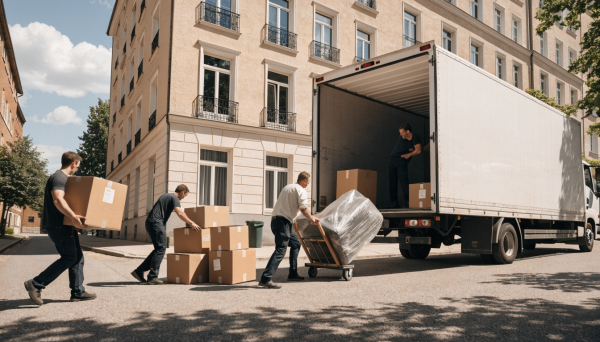
Paperwork is one thing; loading day is another. Three Belgian realities shape the planning, and therefore the quote.
Narrow houses and steep stairs
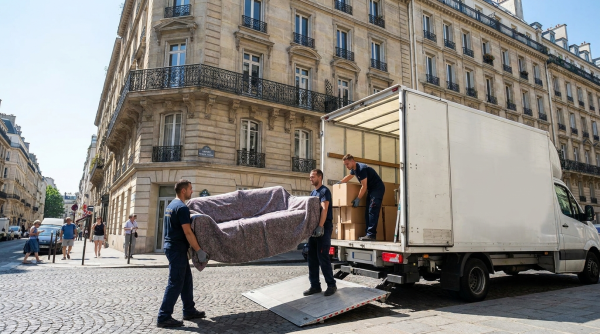
In the classic terraced houses of Brussels, Liège or Ghent, the staircase is often too narrow for a wardrobe or a sofa. The furniture then goes in through a window with an external furniture lift. Mention it during the survey: the lift has to be booked, not improvised on the day.
Parking the truck
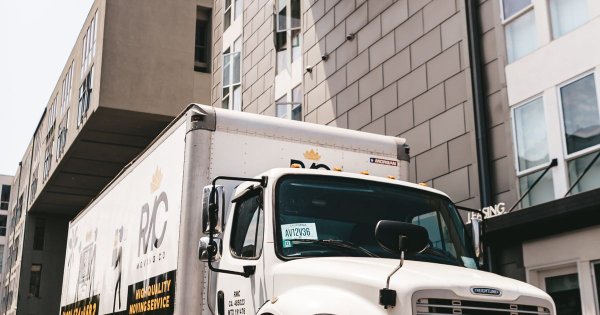
A removal truck cannot sit double-parked for four hours. Ask your commune, several days ahead, how to reserve the space in front of the house and get the temporary signs; each commune has its own procedure. Do the same at the departure address.
Distance and type of transport
From Paris, Amsterdam or Cologne, Belgium is a few hundred kilometres away: a dedicated truck can load in the morning and deliver the same day or the next. From Poland, Spain or Italy the distance makes groupage worth considering: your goods share a truck with other moves, saving up to ~45%, in exchange for a wider delivery window. Start by estimating your volume with our room-by-room cubic metre estimate.
How much does a move to Belgium cost?
There is no fixed tariff: the price depends on volume, distance, date, access (floors, external lift), dedicated truck or groupage, and the transport market at the time you move. We explain each factor in what drives the cost of an international move, and for a move from France see the cost of moving from France to Belgium.
Summary checklist
- Within 3 months: commune registration (Annex 19, residence check, E card).
- Right after registering: a mutualité or CAAMI.
- Once settled: technical inspection, DIV registration, regional tax.
- Before leaving: microchip, rabies vaccination (21 days ahead) and pet passport.
- Four to six weeks ahead: book the removal company, the parking space and, if needed, the furniture lift.
We handle door-to-door moves to Belgium: loading, transport and delivery to your new home. Tell us about your move for a free quote, or see our international home moving service across the EU. For the week-by-week plan, use our international moving checklist and timeline.
Need a shipping quote?
Reach out however suits you best — we reply fast and quote your route for free.



Comments
0Leave a comment
No comments yet. Be the first!