
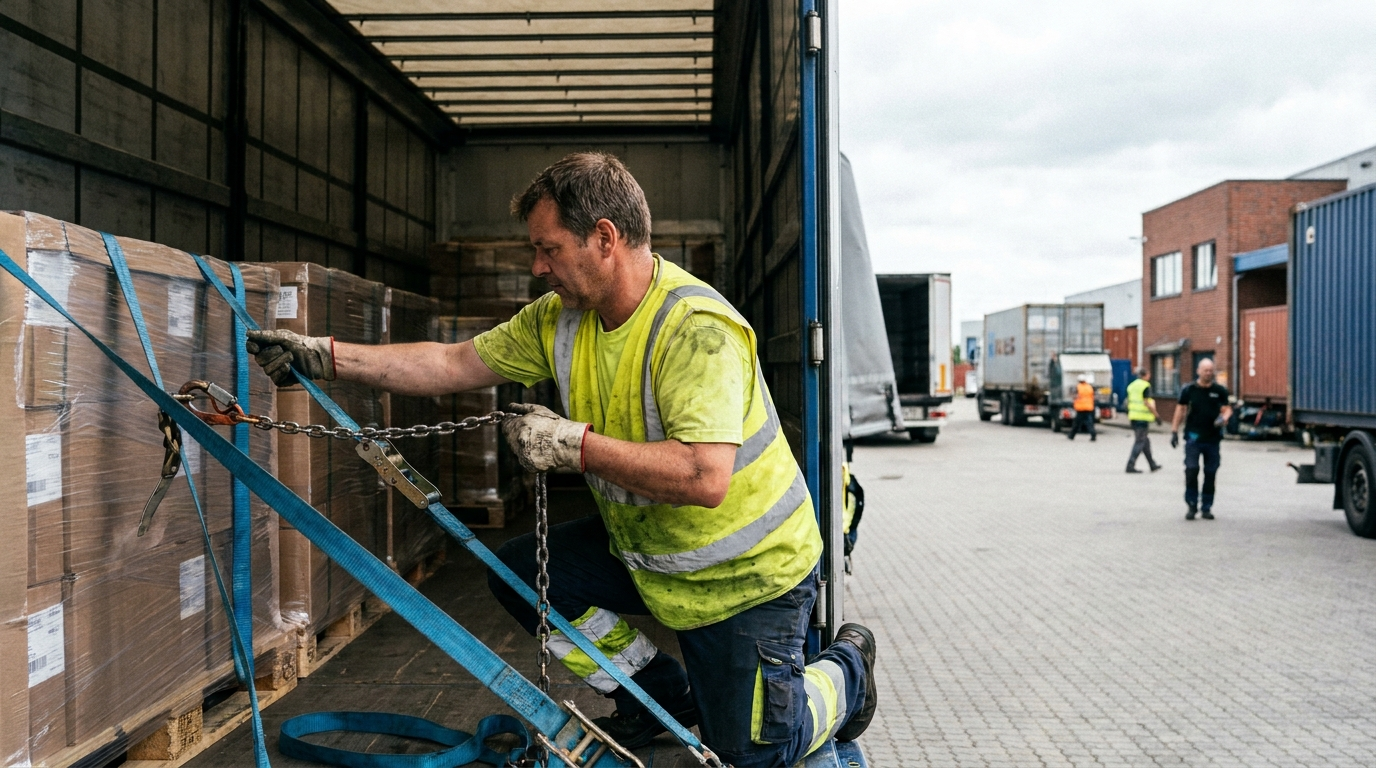
You're shipping a pallet of lithium batteries, aerosols, paints, or industrial chemicals to another EU country — and halfway through the route, the load gets pulled over at a roadside check. The driver's ADR certificate is out of date, the dangerous goods note doesn't match the classification on the packaging, or the vehicle isn't approved for the quantity being carried. The shipment sits for hours, sometimes overnight. Your delivery deadline is blown, your own client is asking questions, and a documentation or classification error can mean a fine on top of the delay.
It happens more often than it should, because plenty of general freight companies will say yes to a dangerous goods shipment without having genuinely ADR-certified drivers, approved vehicles, or a real process for getting the paperwork right before the truck leaves. The gap doesn't show up in a sales call — it shows up at a border crossing or a weighbridge, exactly where a mistake costs the most.
Typical ADR cargo includes lithium batteries and battery packs, aerosols, paints and solvents, industrial chemicals, and equipment containing flammable components — dozens of UN-listed categories in total. For a business shipping this kind of cargo for the first time, the hard part usually isn't the transport itself; it's knowing the correct classification, packaging and marking, and finding a carrier that actually handles it correctly.
An ADR service built to avoid roadside surprises
Layner Group moves dangerous goods across all 27 EU countries with ADR-certified drivers and its own fleet of vehicles from 1 to 24 tonnes — so the truck matches your actual volume and hazard class instead of a generic one-size-fits-all wagon. Every shipment runs under CMR convention compliance and within an ISO 9001-certified quality process, which means the route, the documentation and the accountability are settled before pickup, not sorted out after something goes wrong.
- Drivers holding a valid ADR certificate for the relevant hazard class
- CMR convention compliance on every shipment
- ISO 9001 certification — a process, not a one-off claim
- Own fleet, 1–24 tonnes, matched to your actual volume and hazard class
- Preliminary quote in 15–30 minutes
- Flexible payment: 10% deposit, balance due before unloading
Need a shipping quote?
Reach out however suits you best — we reply fast and quote your route for free.
What the service actually covers
We don't just send a truck. Before the route is confirmed, we check the cargo's classification — UN number, hazard class, packing group — and prepare the full ADR document set: the dangerous goods declaration, written instructions for the driver, confirmation of the driver's valid ADR certificate and, where the cargo and packaging require it, vehicle approval documentation. That takes the risk of a paperwork error surfacing mid-route off your plate.
If you want the full regulatory background on classification and paperwork before your first shipment, our article on ADR transport of dangerous goods across Europe and the mistakes shippers commonly make covers it in detail.
Why the carrier's certification actually matters
The difference between a carrier that "also handles dangerous goods" and one that specializes in ADR shows up at the checkpoint, not in the sales pitch. An inspector checks the driver's certificate, the packaging markings, the vehicle's compliance and the paperwork together — any mismatch means a hold of at least a few hours, and in the worse case, a fine and a stalled shipment. For the shipper, that's not an abstract risk: it's a missed delivery window with your own client and a reputation cost that's hard to explain after the fact.
Beyond ADR-specific paperwork, EU road shipments generally also need the standard freight documentation in order — see our guide to CMR, T1 and the key documents for road freight in the EU for what else to have ready.
How ADR pricing works
ADR transport naturally costs more than standard freight, because the price includes a certified driver, a vehicle that meets the requirements for that hazard class, and safety equipment that a standard shipment wouldn't need. The exact cost depends on the hazard class, volume, route and whether a return load is available — there's no flat per-kilometre rate for ADR, and we won't quote a number before seeing your cargo details. You'll get a preliminary quote within 15–30 minutes of submitting them.
What to have ready before you contact us
- UN number of the substance or article
- Hazard class and packing group
- Exact volume and weight of the shipment
- Route: origin and destination country and city
The more complete this information is up front, the faster we can confirm the route, the vehicle and the paperwork — and the less chance anything surfaces once the truck is already on the road.
Send us your cargo details through the quote form and we'll come back with a preliminary quote and transport plan within 15–30 minutes.