
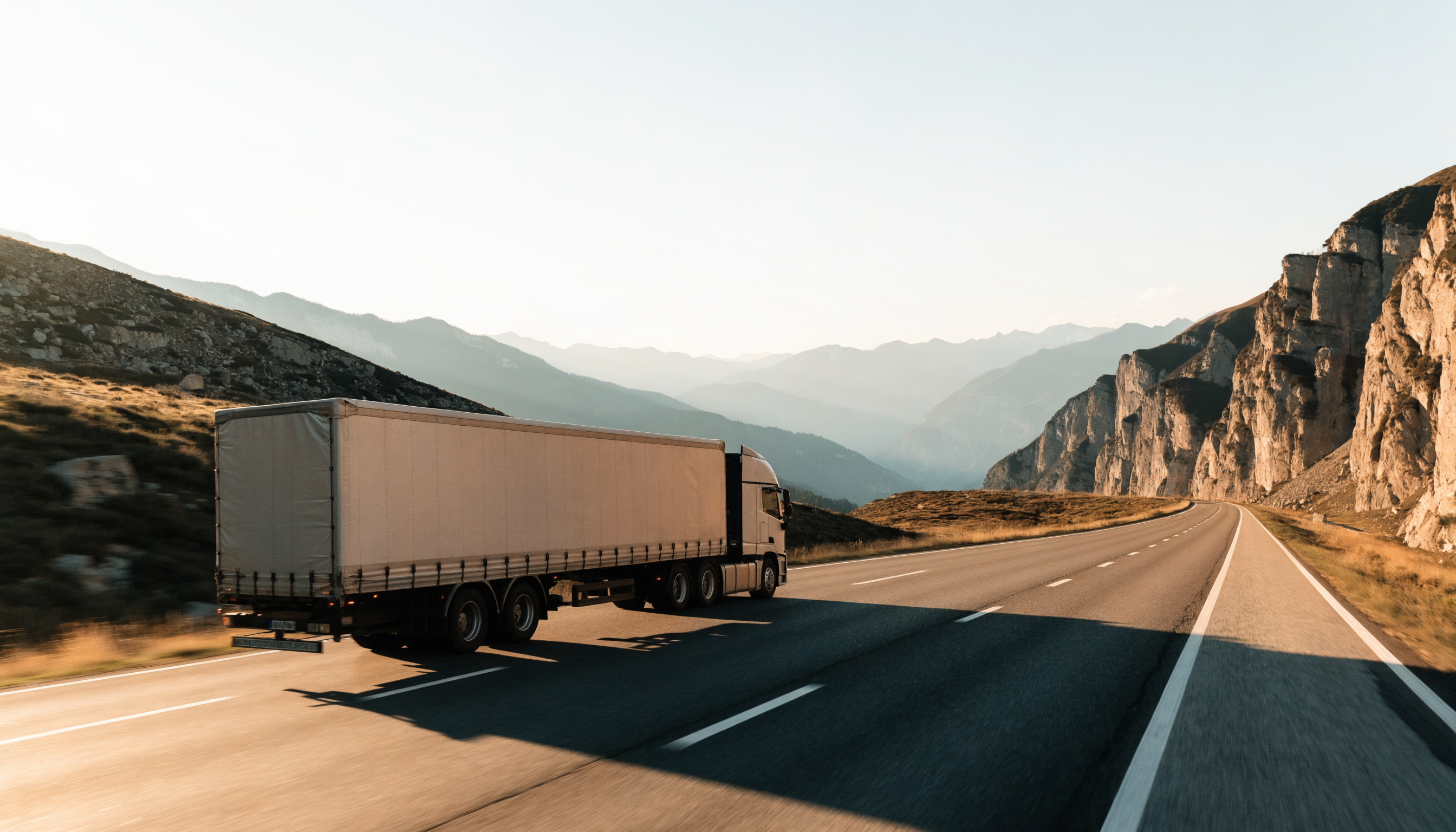
When a shipment fills a trailer on its own, or simply can't afford another handling stop, FTL (full truckload) is the most reliable way to move it between Germany and Italy. Layner Group runs these lanes with its own fleet from 1 to 24 tonnes, issues CMR documentation on every trip, and sends a preliminary quote within 15-30 minutes of your request.
What FTL means, and when it beats groupage
With FTL, one vehicle is dedicated to one client from loading to unloading. Nothing else goes on the trailer, nothing gets transferred at a consolidation hub, and the load sequence stays exactly as you set it. That translates into a fixed pickup and delivery slot and far less handling risk than freight that changes trucks along the way.
Groupage (LTL) is the more economical choice for small, low-risk shipments that can share a trailer. FTL earns its cost back when you're moving a palletised load of several tonnes or more, when the cargo is sensitive to handling — machinery, glass, electronics, finished goods — when you need a fixed loading or delivery date rather than a flexible window, or when your volume is large enough that a groupage rate would cost more per pallet than booking the whole truck.
Transit times and coverage across the route
Germany and Italy are connected by one of the densest and most established motorway corridors in Europe, running through the Alpine crossings. A direct FTL shipment typically takes anywhere from one to a few days, depending on the exact pickup and delivery points, Alpine pass traffic, and driver hours-of-service rules. We confirm a realistic transit window for your specific origin, destination, and volume in the quote itself, rather than promising a fixed number upfront.
We collect and deliver across both countries — from industrial areas around Munich, Stuttgart, and Cologne through to logistics hubs near Milan, Turin, and Bologna, to name a few examples. Coverage isn't limited to these cities: the truck comes to your loading address anywhere in Germany or Italy.
What kind of cargo typically moves on this lane
Germany-Italy is one of Europe's busiest industrial corridors, and the cargo mix reflects that: palletised goods and components, machinery and production equipment, automotive parts destined for assembly lines, construction and finishing materials, and retail goods for distribution networks. For oversized or unusually heavy loads, tell us the dimensions and weight up front so we can match the right vehicle from our fleet before quoting.
Cargo safety, insurance, and documentation
Carrier liability in transit is governed by the CMR Convention, and that's the standard we work to on every run — it's also what determines how a claim is handled if something goes wrong. For shipments that stay within the EU's free circulation, a customs transit document (T1) usually isn't required. If your cargo has entered from outside the EU and is still under customs supervision, flag that when you request a quote so we can confirm exactly what paperwork applies to your case.
A standard FTL run travels with a CMR consignment note plus your commercial documents — invoice and packing list — and any additional certificates your specific cargo requires. We'll confirm the exact list for your shipment at quote stage, so there are no surprises at the loading dock.
Why shippers choose Layner Group for the Germany-Italy lane
A truck stuck at an Alpine crossing or held at the border doesn't just delay a delivery — it can stop a production line or blow a retail delivery window, and a price that only gets confirmed "on the day" makes budgeting impossible. We remove both risks. Over 10,000 commercial shipments completed and ISO 9001 certification stand behind every dispatch, and our own fleet, from 1 to 24 tonnes, means we assign the right size vehicle to your load instead of leaving you to wait for a spare truck from a third-party carrier.
You get a preliminary quote in 15-30 minutes — a real turnaround time, not a marketing line — and payment is staged: 10% to confirm the booking, the balance before unloading, so you're never asked to pay the full amount upfront on trust alone. Routes are planned to cut both cost and CO2, which matters for the freight budget and, increasingly, for your own sustainability reporting.
What if the cargo is damaged in transit? Liability is set out under CMR, and claims are handled against that standard, not case by case. What if your volume changes after you've booked? Tell your account manager and we'll revise the quote to match the actual load — you're never locked into the first number if the shipment changes.